It’s Summertime! Looking Back on a Year of Safe Routes to School
Reflections on how Safe Routes is supporting Tucson youth & families
In a recent national webinar, a fellow Safe Routes to School Manager posed the question:
“Have we created the conditions to allow kids to succeed?”
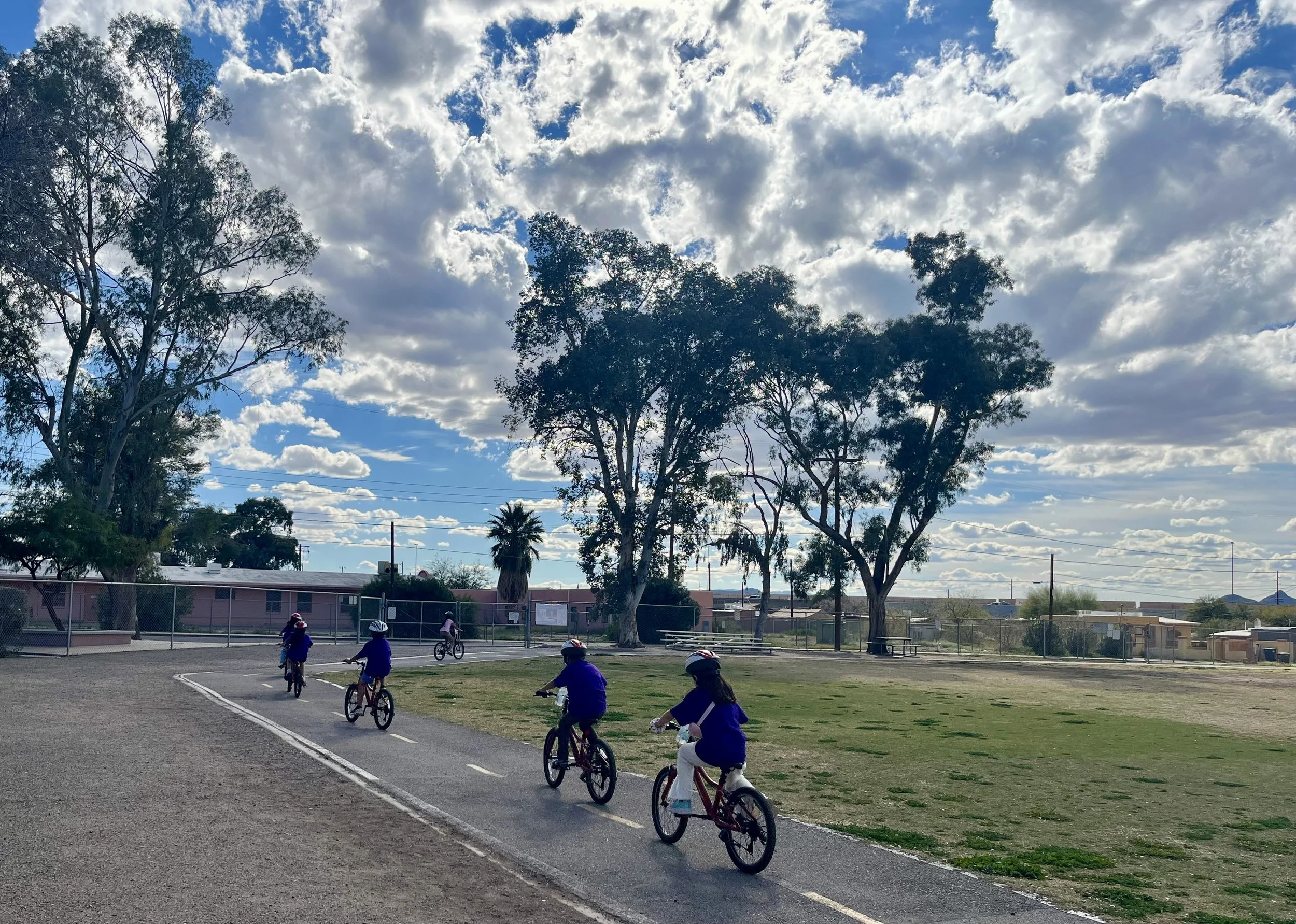
Safe Routes to School (SRTS) supports safe, easy, and fun opportunities for children and families to bike and walk to school, but the impact goes much deeper. When young people have the opportunities to move independently, build confidence, explore their neighborhoods, and have their voices heard, they gain skills that support their growth.
As this school year comes to a close, we are reflecting on how our Safe Routes to School program helps students and families thrive: How are our programs supporting students and families to succeed? How are they building tapered steps towards independent mobility?
Here are three ways that Safe Routes to School is helping Tucson youth and families build confidence, connection, and opportunity:
1. Expanding Access and Inclusion
There is no “one size fits all” approach in Safe Routes to School.
Every school has their unique needs and barriers to biking and walking, and together develop strategies to achieve better access and inclusion. That’s why we work closely with students, families, and partners to design our programs that meet their specific needs.
This year, our partnership with the John Valenzuela Youth Center, predominately serving youth from Ochoa Community School, is a great example of collaboration that led to adapting programming and educational opportunities.
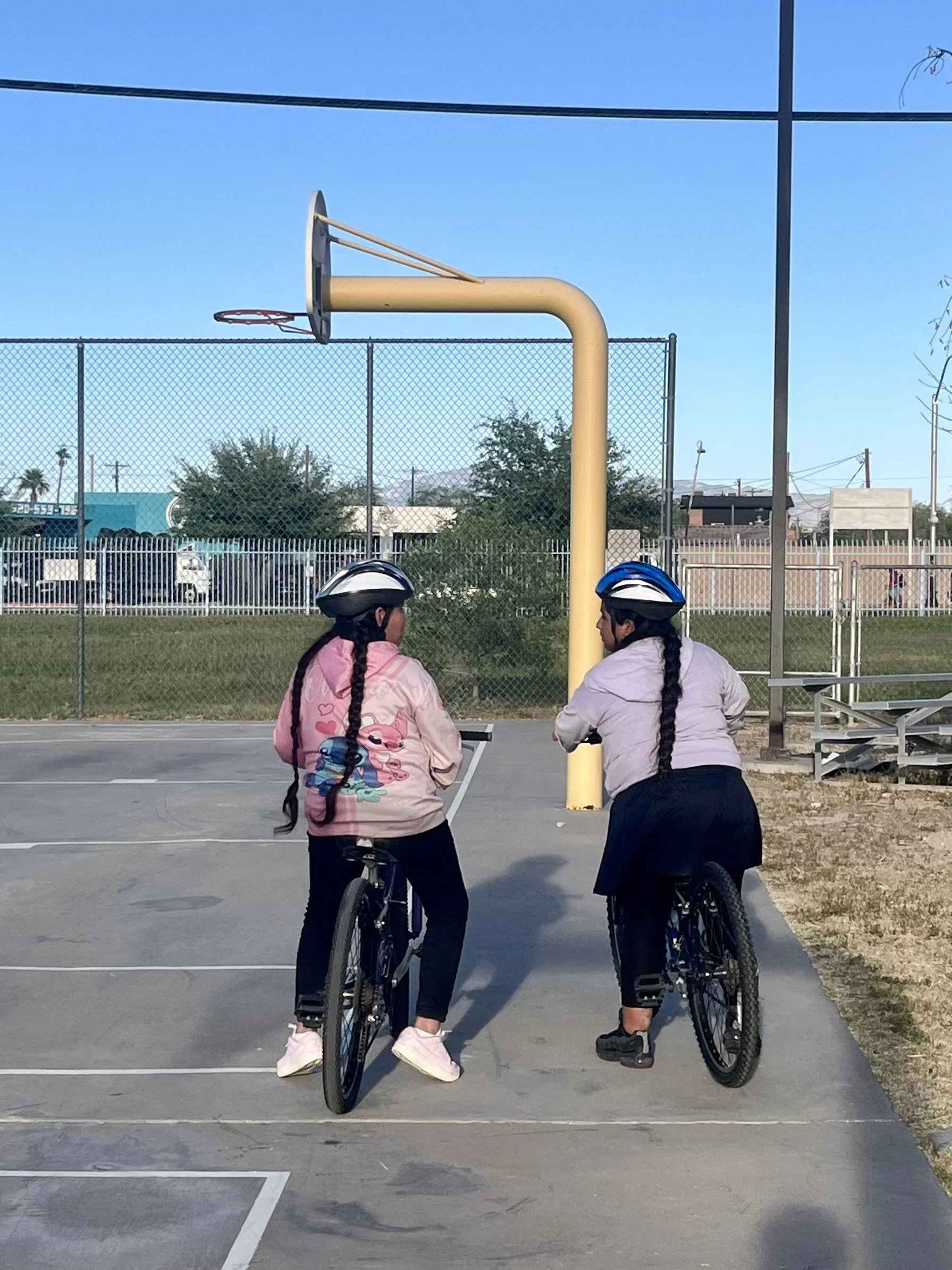
For a decade, LSA and BICAS have supported a weekly Bike Club at the afterschool center for 3rd and 4th grade students. In recent years, however, we’ve noticed participation from girls was declining. We also know that young girls often report lower confidence while learning to ride a bike.
Together with JVYC staff, we asked a simple question: What if we could build confidence before students reached Bike Club age?
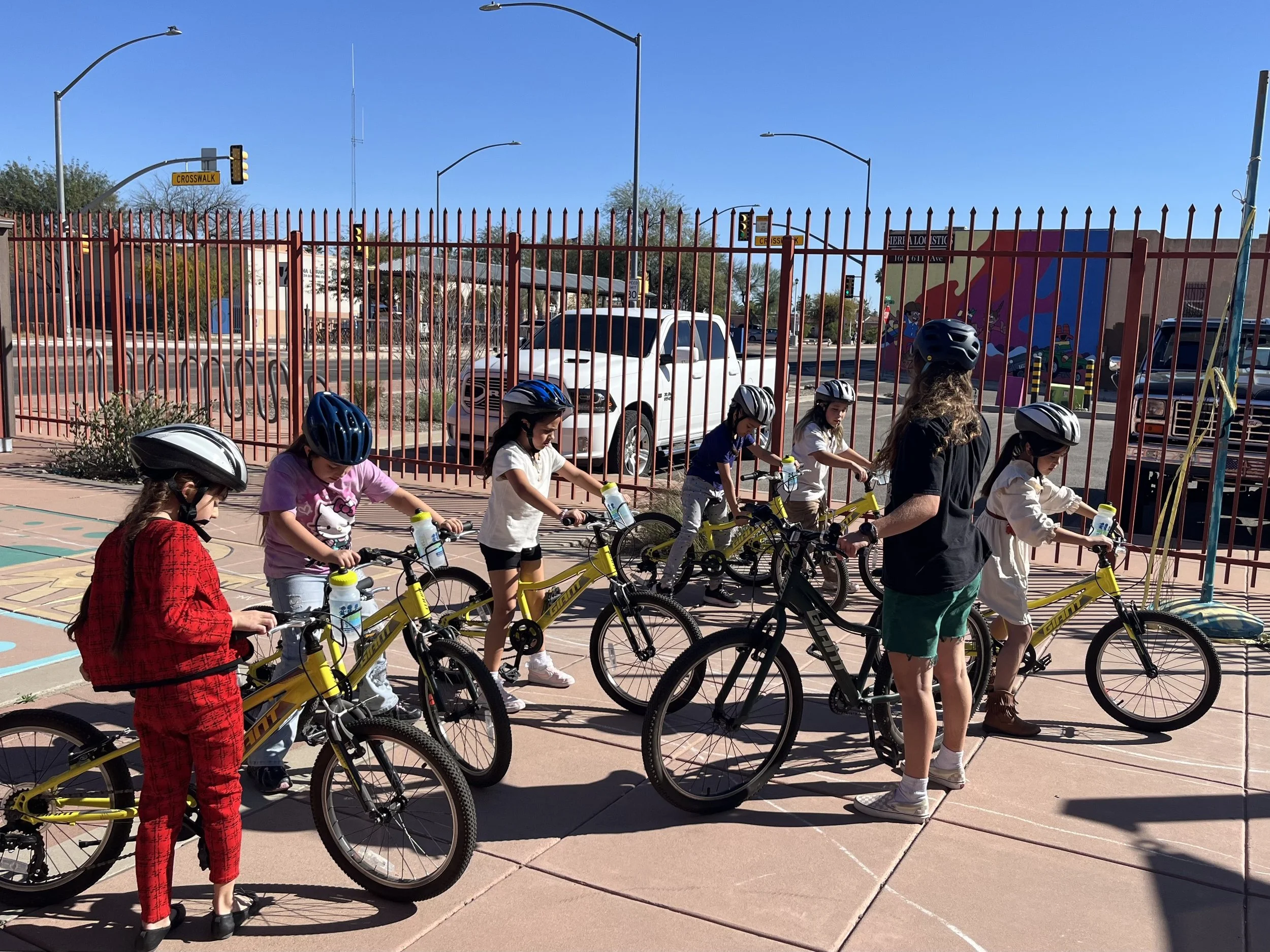
The result was a pilot program for 2nd grade girls at the center who would be eligible next year to join Bike Club. They were thrilled by the opportunity to spend some time together learning to ride. Six of the eight participants were new riders, not yet having moved on from training wheels. It can be intimidating to join in 3rd grade for those who have not yet had the opportunity to learn.
Over the course of the semester, the group worked on balancing, braking, and safe maneuvering in a mutually supportive environment. Each session was full of laughter, some singing, and an occasional tear. In no time, every girl was riding on two wheels.
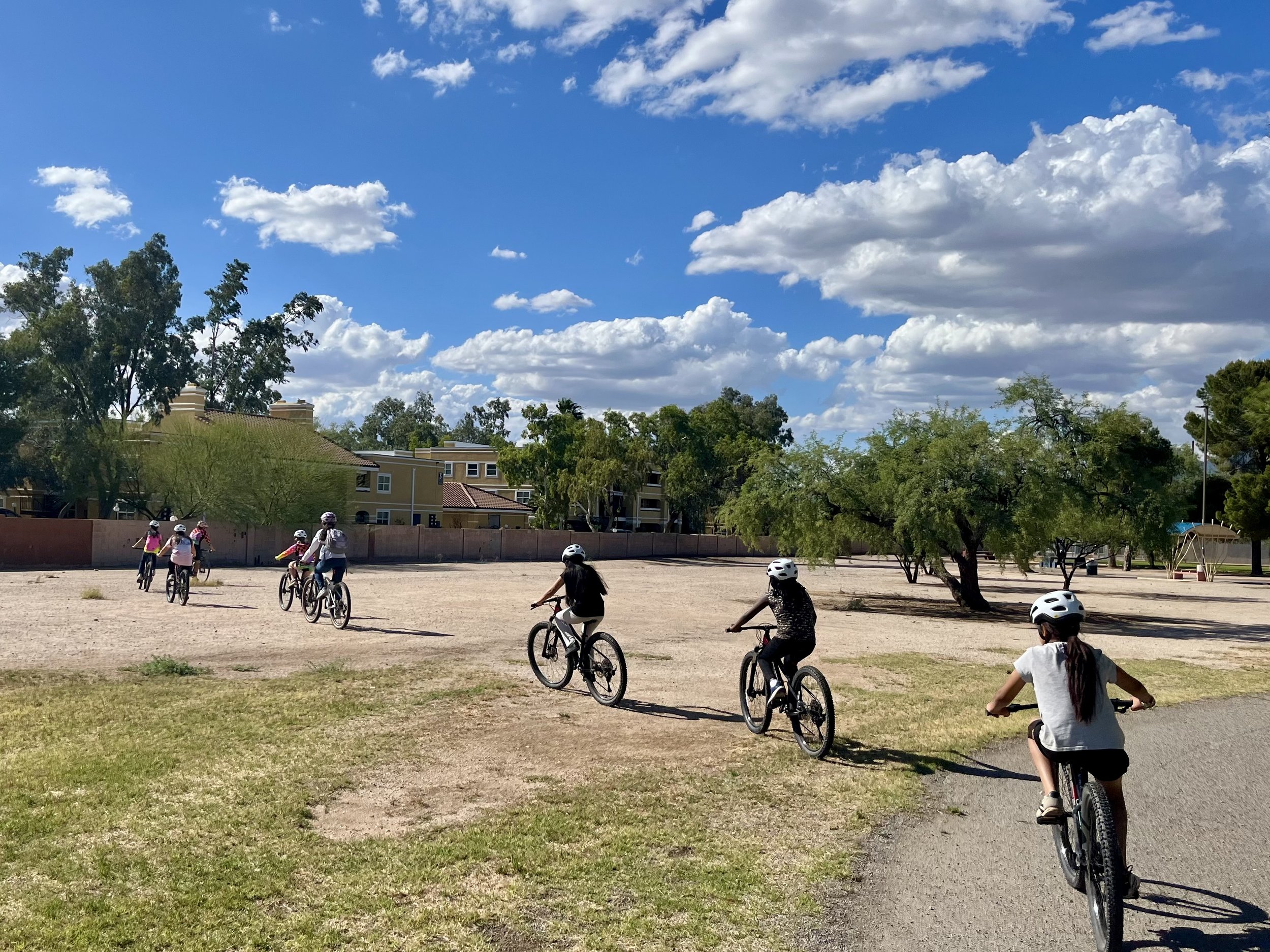
The semester culminated in a celebratory ride to a nearby park. All eight students stated they felt much more confident riding and were excited to join next year’s Bike Club.
These girls-only sessions not only support more enrollment in the regular bike club, but also provides the space and support for these young students to build confidence that carries over into everyday life. Learning to ride a bike becomes a lesson in self-belief, perseverance, and the courage to try something new.
2. Fostering Connection and Belonging
One of the most important ways Safe Routes to School builds a culture of walking and biking is through fun community events and rewarding experiences that get young people and their families excited to participate in more walking and biking.
Many students tell us that their favorite part of participating in our programs is spending time with their friends and the fun destinations we discover in their own communities.
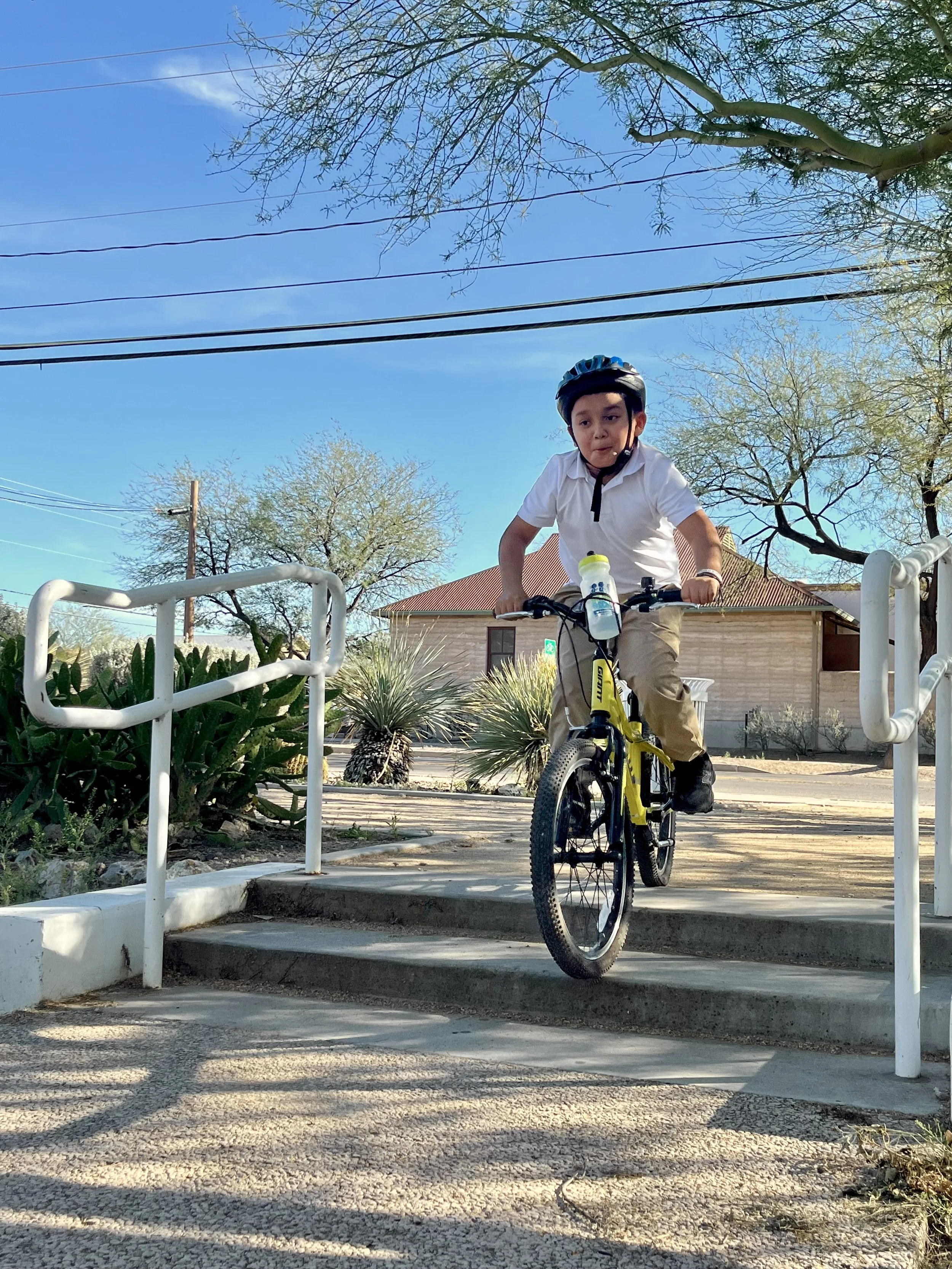
Fifth-grader Pablo, put it best: “I like the bike club because I get to discover different places every Wednesday.”
Building in these incentivizing opportunities leads encourages them to explore their communities through biking and walking outside of program time.
Our signature event, Cyclovia Tucson, often provides families with their first opportunity to ride together on car-free streets. The event gives them a glimpse of what regular active transportation could look like for their family.
This spring, fourth grader Xavier who has ridden with the JVYC/Ochoa Bike Club for two years, led his family through Cyclovia, including his younger sister who was just learning to ride. Moments like these demonstrate how confidence gained through Safe Routes programming can ripple outward, inspiring an entire family to become more active.
Some of our favorite highlights included:
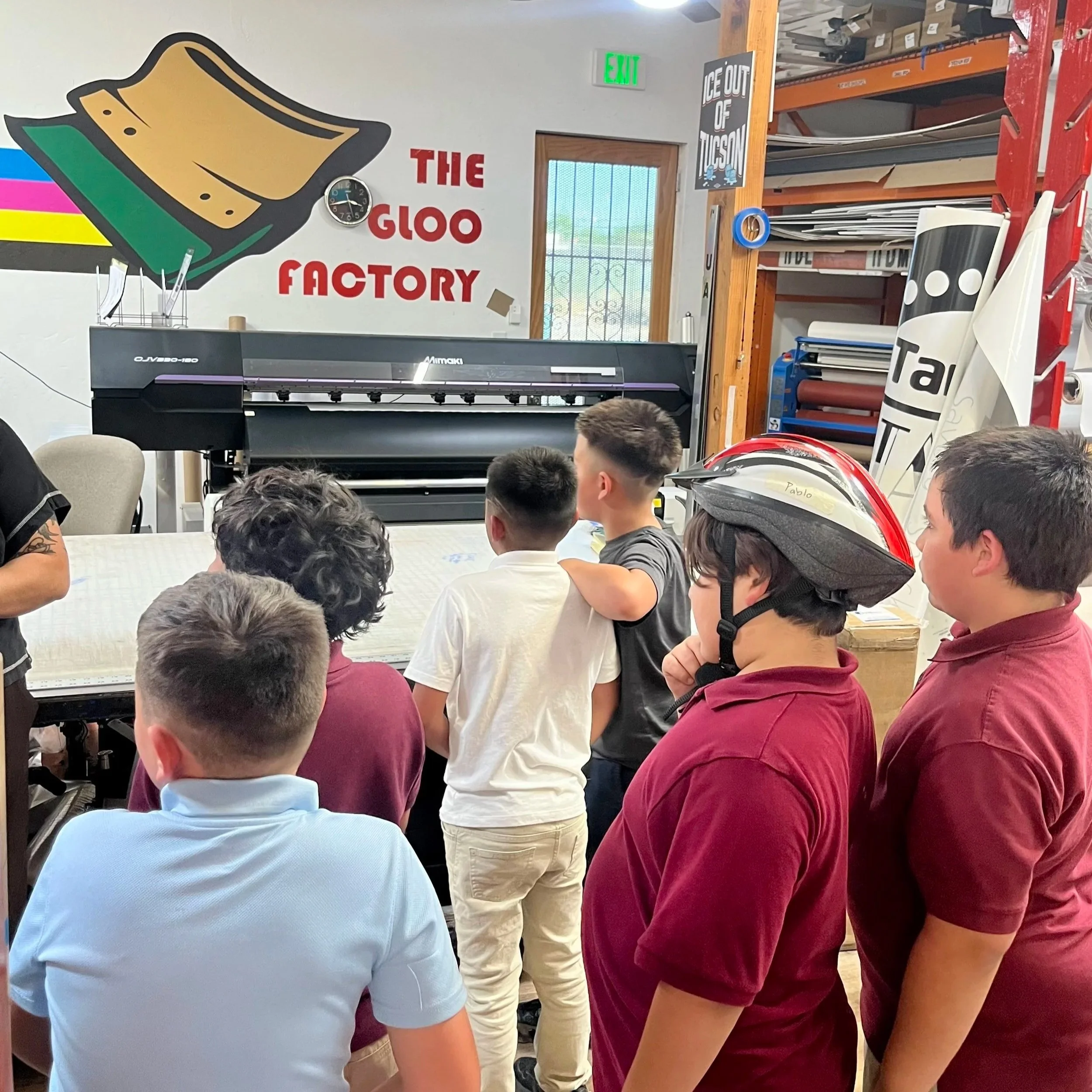
A visit to the Gloo Factory, a union run print shop based in South Tucson where bike club participants got to print their own buttons and bandanas.
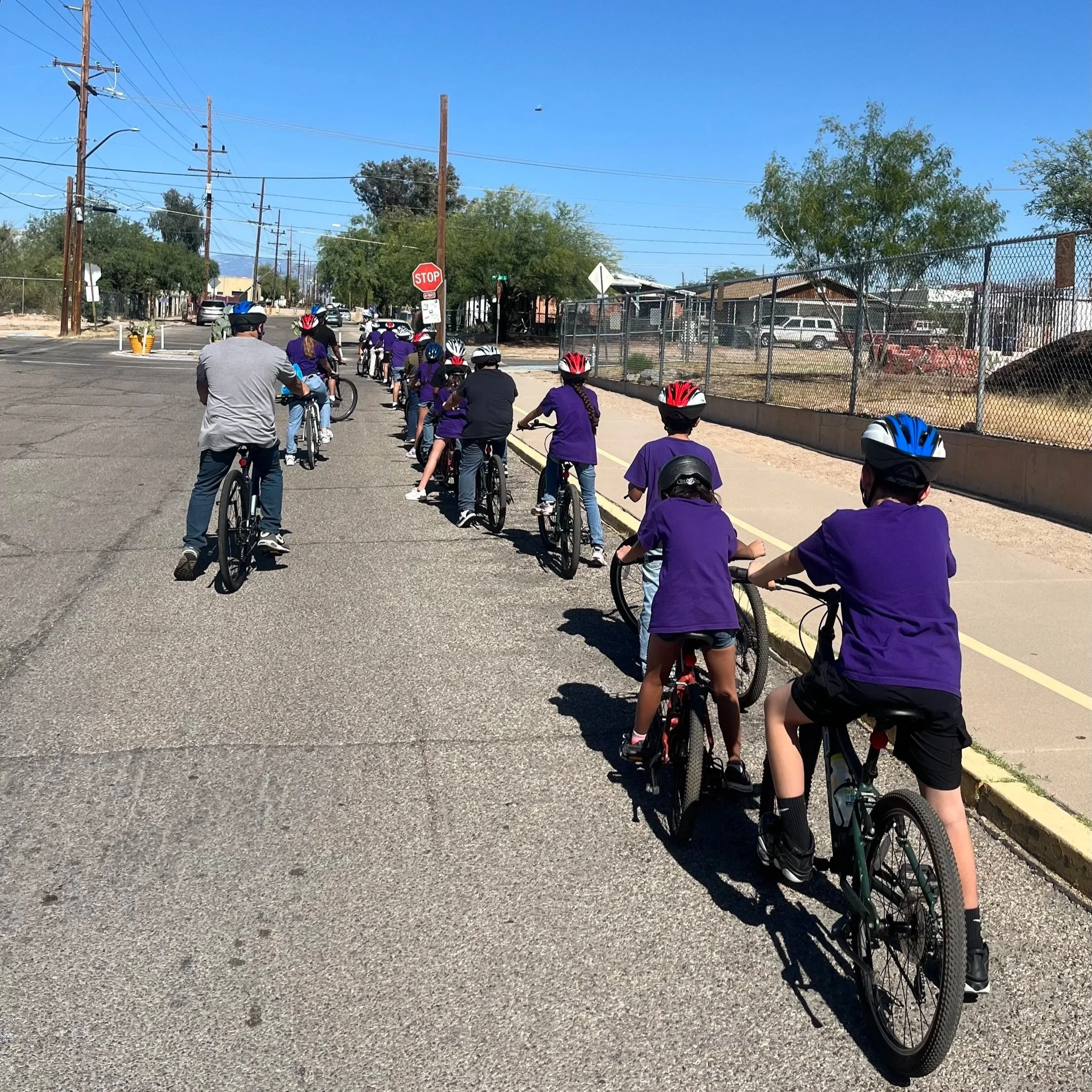
An end-of-year celebratory group ride to the park for students enrolled in Mission View Elementary’s afterschool bike program and their parents, topped off by a frozen treat.
A two day bicycle rodeo with the entire middle school at Pueblo Gardens K-8 hosted in collaboration with Project Bike Club emphasizing the joy of riding while also navigating an engaging “traffic garden” through which students communicated and negotiated space while moving through the fun obstacles.
When students associate biking and walking with friendship, discovery, and joy, they are more likely to choose active transportation long after the program ends.
3. Supporting Community Leadership in Building Safer Streets
Safe Routes to School is about more than helping students navigate their streets. It’s also about helping them understand how they can shape them.
At Los Amigos Technology Academy, students participating in the Walking School Bus see firsthand how community action can improve everyday experiences. Between 100 and 140 students participate regularly in a weekly walk to school led by teachers and caregivers.
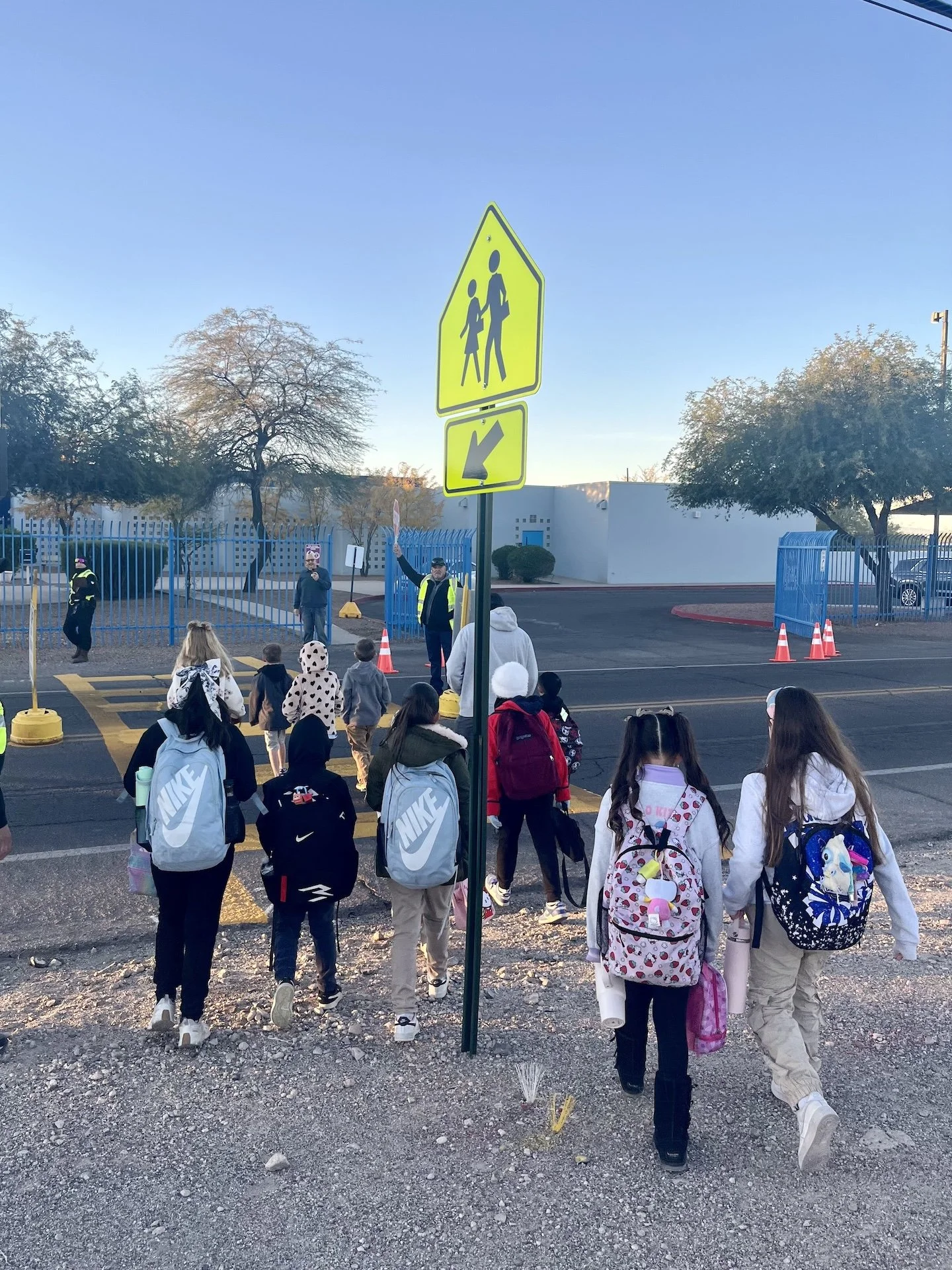
This year, the school celebrated the addition of a painted crosswalk where students enter the school. The improvement is one of several changes that have resulted from years of collaboration with families, school staff, and city staff to improve Drexel Road. More than a decade ago, we worked with community members who identified the need for safer walking and biking facilities along Drexel Road. Construction of a long-awaited multi-use path along Drexel is expected to begin in the coming year, funded through Proposition 407, which Tucson voters approved in 2018. The timeline illustrates an important lesson: the transportation investments we make today, shape how future generations move through their communities. We will continue to work alongside community partners to ensure the project moves forward and delivers the safe connections students and families have been waiting for.
Helping students succeed also means helping them understand that they can play a role in shaping the future of their communities. Since 2024, we’ve supported a bicycle elective that combines mechanical training, group rides, and leadership development at Pueblo High School. Students take turns leading, setting the pace, learning how to navigate the environment, and making real time decisions.
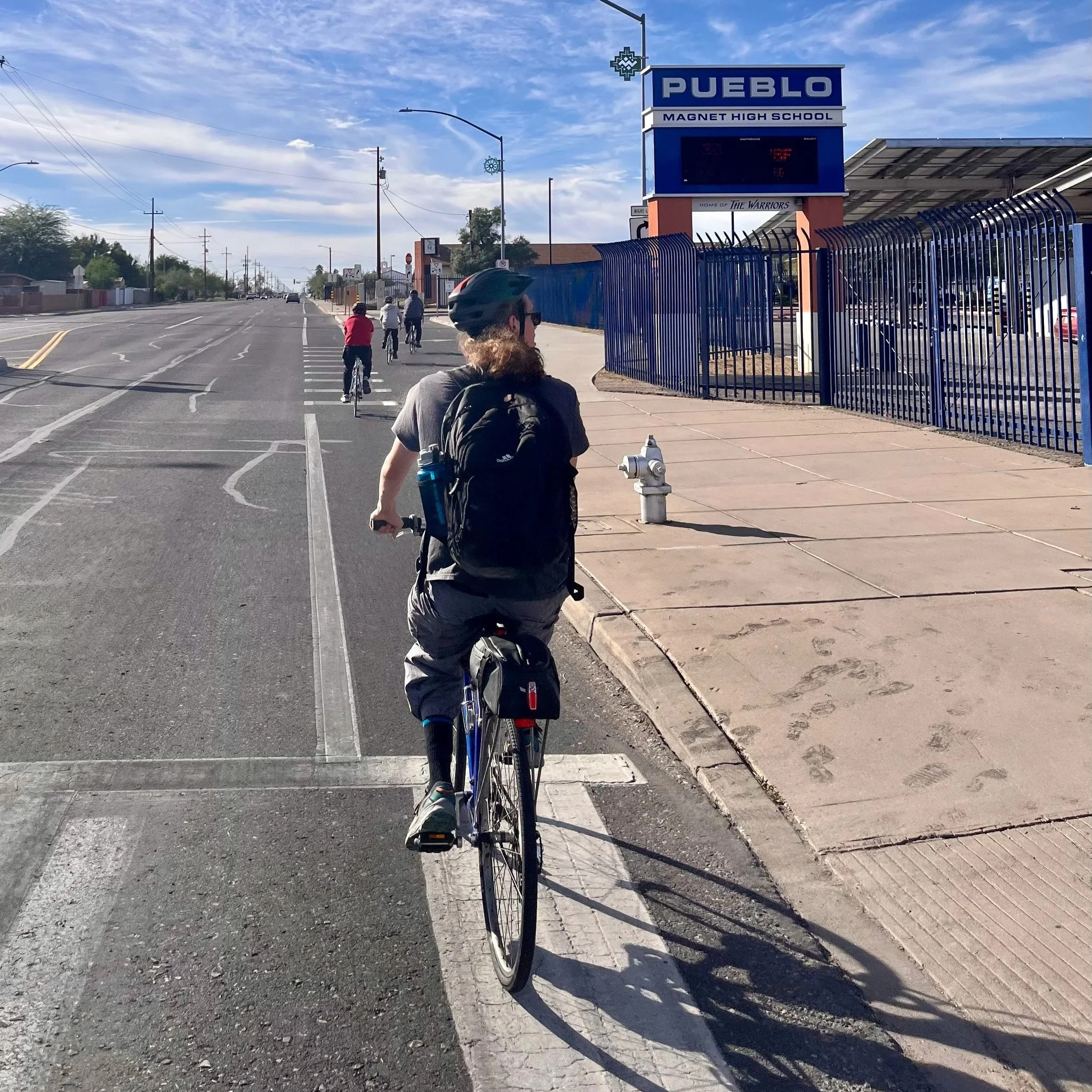
The ride concluded at BICAS, where students participated in deconstructing a bike with “Community Tools” so that the parts could be reused or recycled and made available to the public through purchase or Work-Trade options. While they sat around a table creating keychains and bracelets out of recycled small bike parts, they participated in a facilitated group conversation touching on themes of “why we ride” and “challenges and benefits” with the opportunity to ask questions about Lydia’s work as a city planner.
Tori, a high school senior, shared that the most outstanding thing they learned about in bike class was “the vast amount of bike infrastructure around Tucson.”
Tori was one of two students from the class who also participated this year as mechanical apprentices, joining our Mobile Bike Repair team for outreach events which culminated in them running a SRTS Repair Booth at Cyclovia with the support of professional mechanics from the community.
By giving students opportunities to lead, share their perspectives, and engage with city staff, they can begin to see that they are not just riding bikes, but they can be active participants creating safer, more connected communities.
Looking Ahead to Next Year
The warm Tucson summers are a great time for reflection. A time to synthesize project takeaways and plant the seeds for new growth in the coming year. We look forward to strategizing with all our partners in the coming months to kick-off next school year with more opportunities for students to succeed.
So, how can you support safer streets and the success of students and families?
Creating safe, connected communities where young people can thrive takes all of us. Here’s a few ideas to get involved.
Bring Safe Routes to your community. Visit saferoutestucson.org for more resources and opportunities to support walking, biking, and rolling at your school.
Advocate for safer streets in your neighborhood. If you live in the City of Tucson, consider applying for a Safe Streets Mini-Grant to bring traffic calming improvements to your neighborhood.
Partner up with us! If you are a local business or partner who wants to get involved with our programs, email us at saferoutes@livingstreetsalliance.org. Some ways to help: donations of food/snacks or gear; hosting a field trip visit to your local business; providing gift cards for our safe routes champions, or volunteering with us.