
Amphi Bloom: A Community-led Traffic-Calming Installation
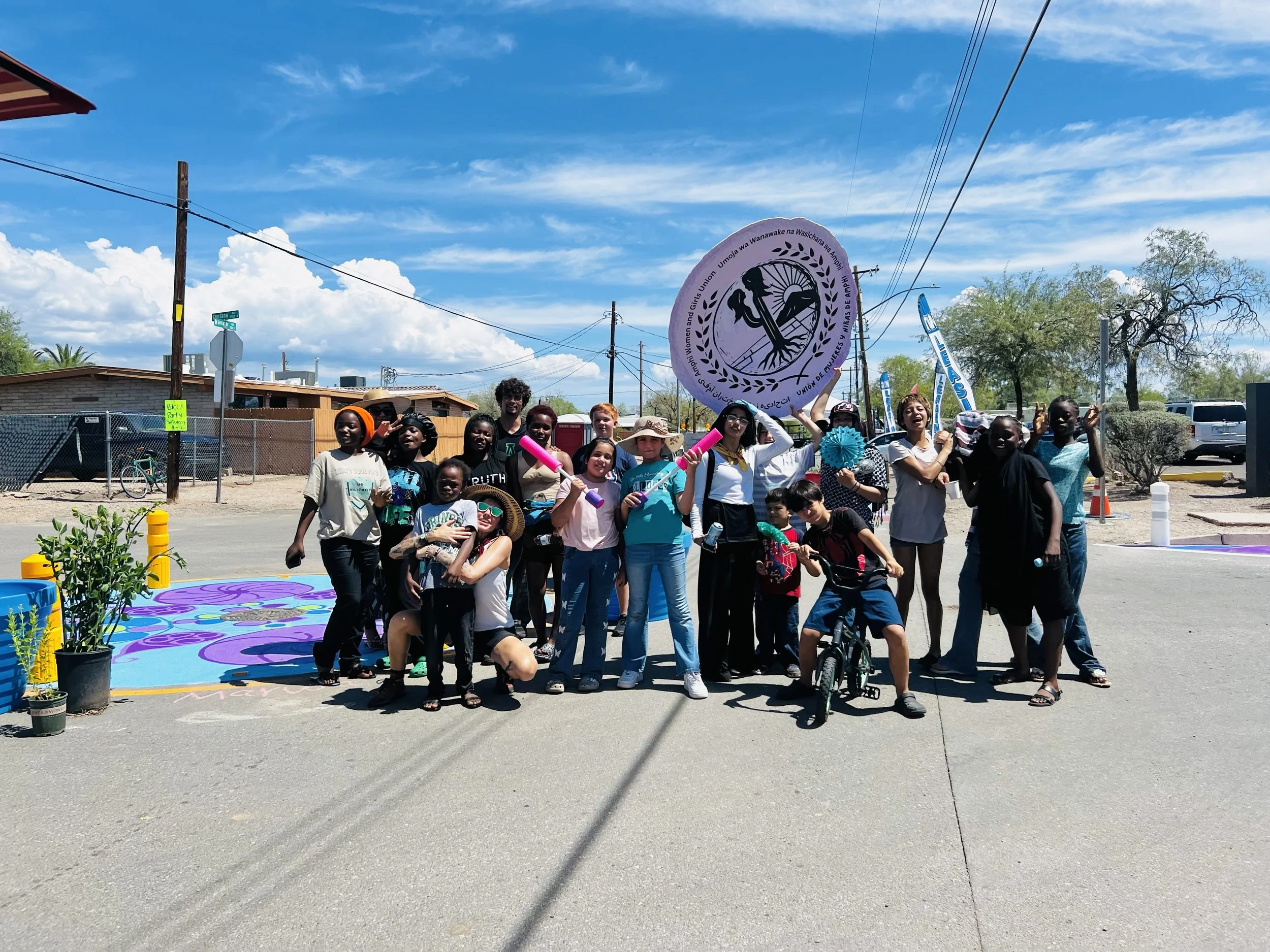
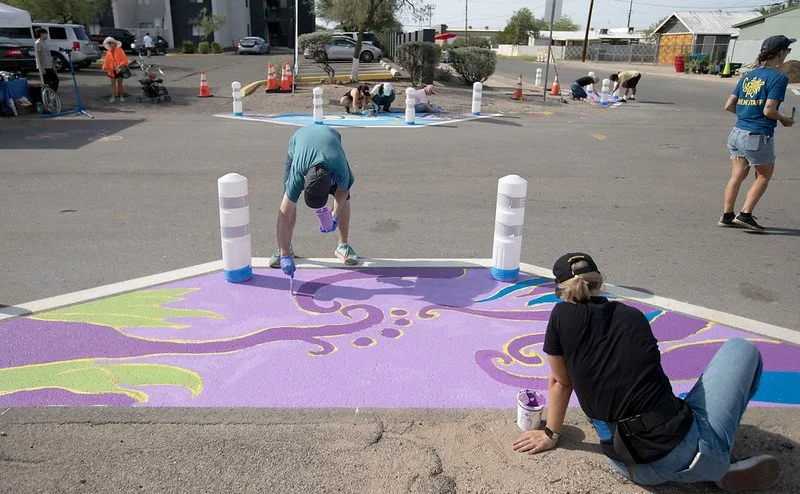
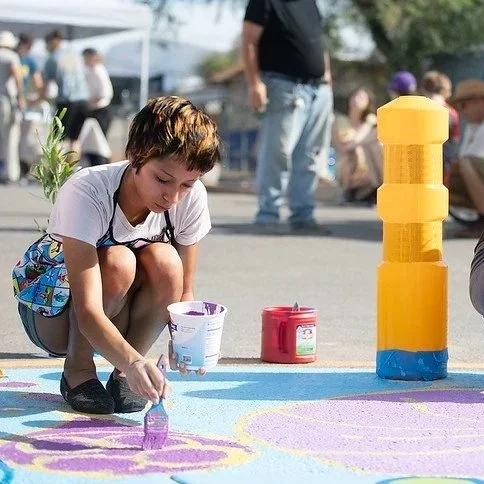
Ten days ago, on September 5th, 80 people came together in the Amphi Neighborhood—most of them residents of the neighborhood—to paint a traffic circle and some chicanes, or “bump outs,” with a gorgeous mural.
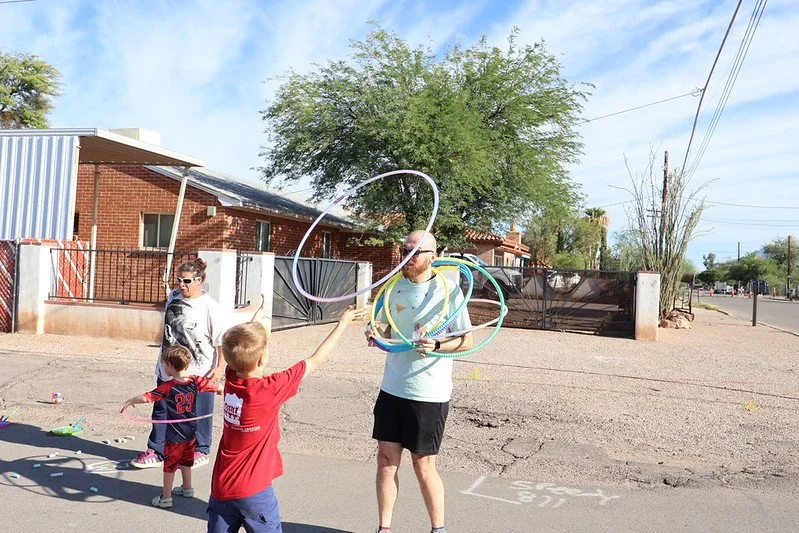
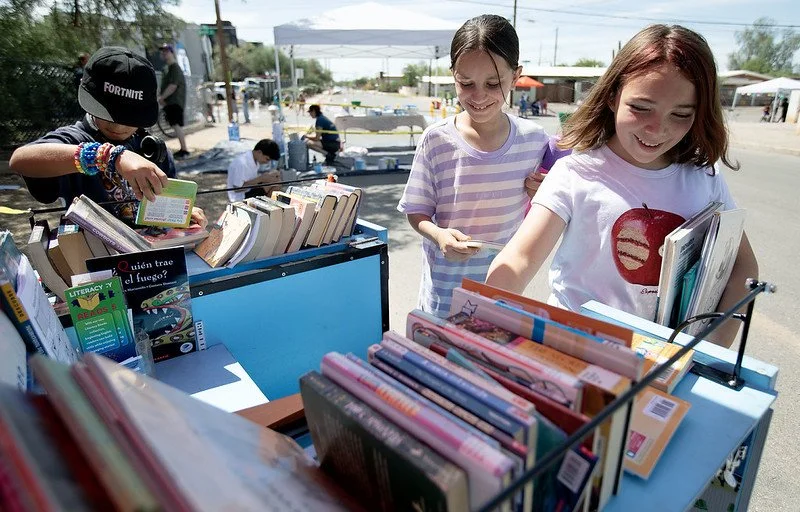
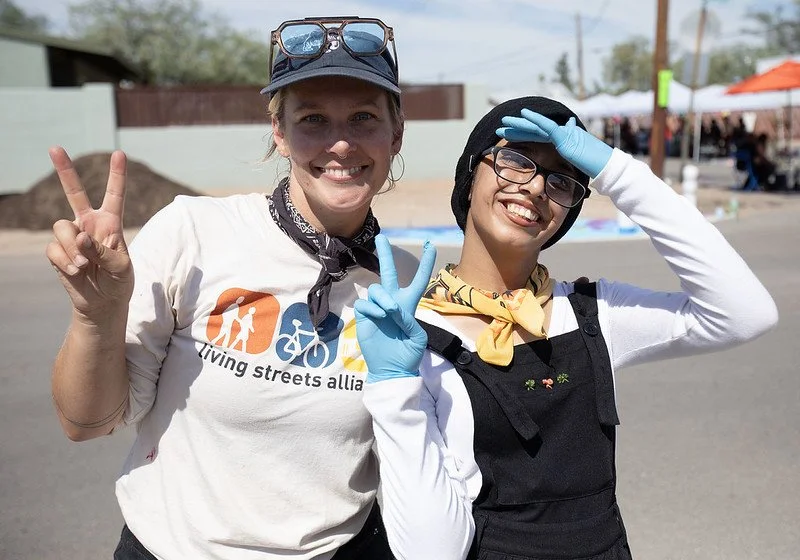
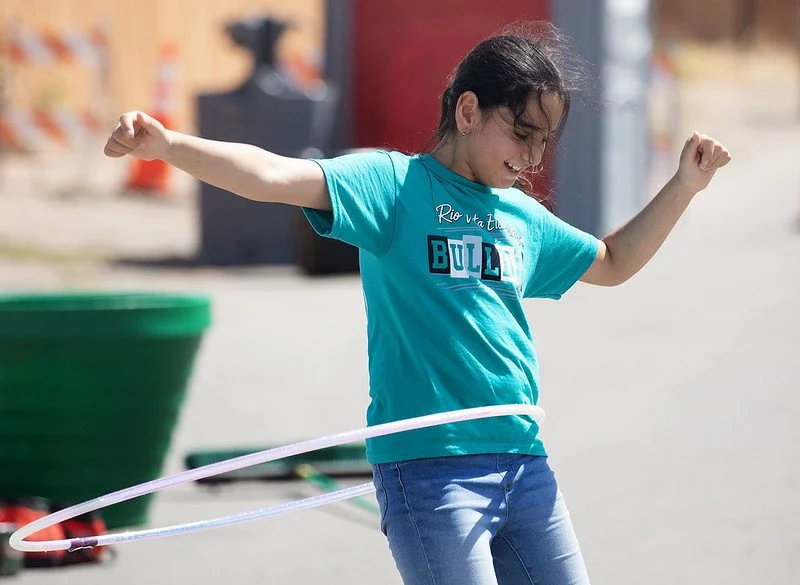
We closed the streets to cars and hosted a Block Party that turned the street into a space for kids to hula hoop, blow bubbles, ride bikes, and dance to their favorite songs. Neighbors of all ages painted, got their bikes fixed at the mobile bike repair station, enjoyed Afghan and Mexican food, and planted native plants into giant, colorful planters. Tucson Clean and Beautiful gave away 30 free trees and helped us plant everything—shoutout Rex and Emmy for the support! We worked closely with The Amphi Women and Girls Union (AWGU), who all showed up with big smiles ready to paint, help run the event, and, of course, choose the awesome playlist.
It was a beautiful day and the culmination of our summer sessions with the AWGU.
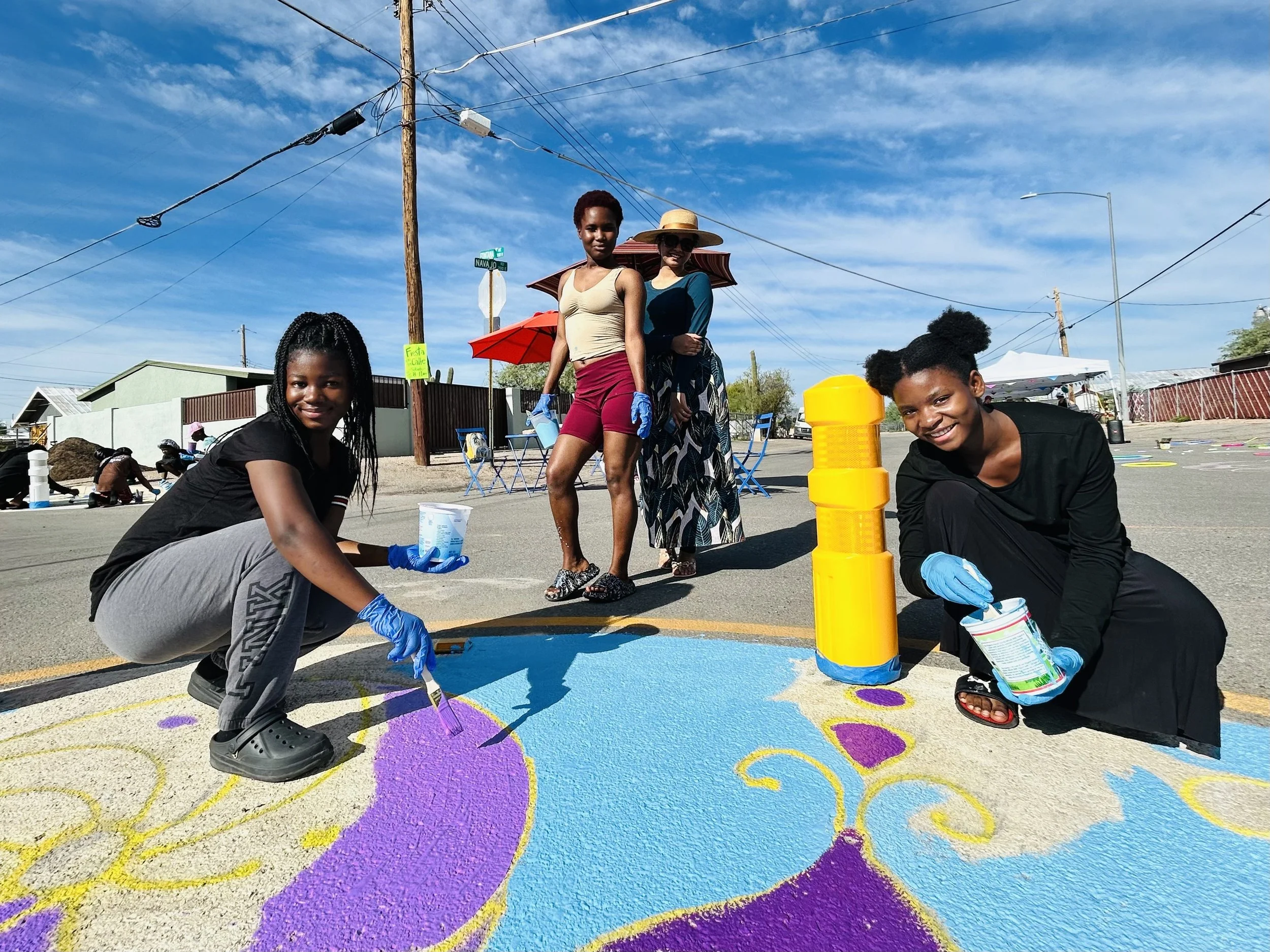
Photo by LSA staff
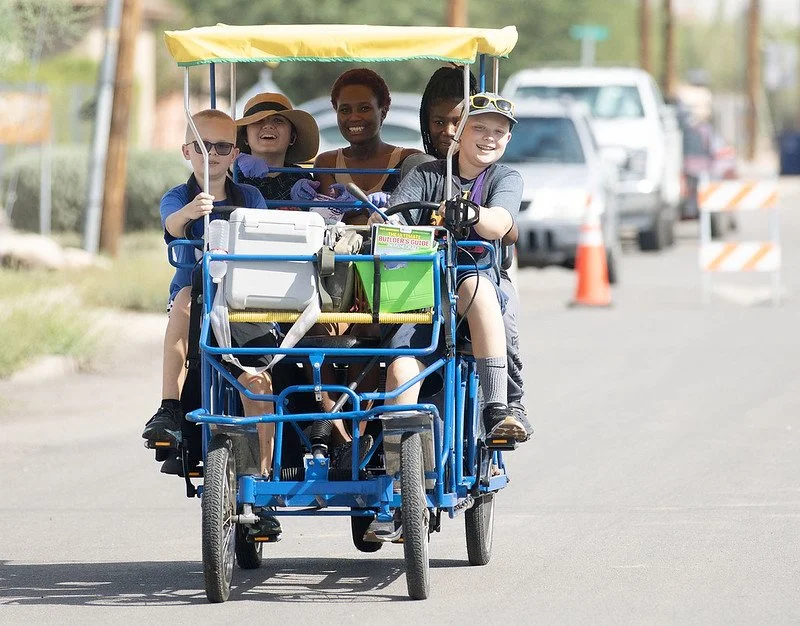
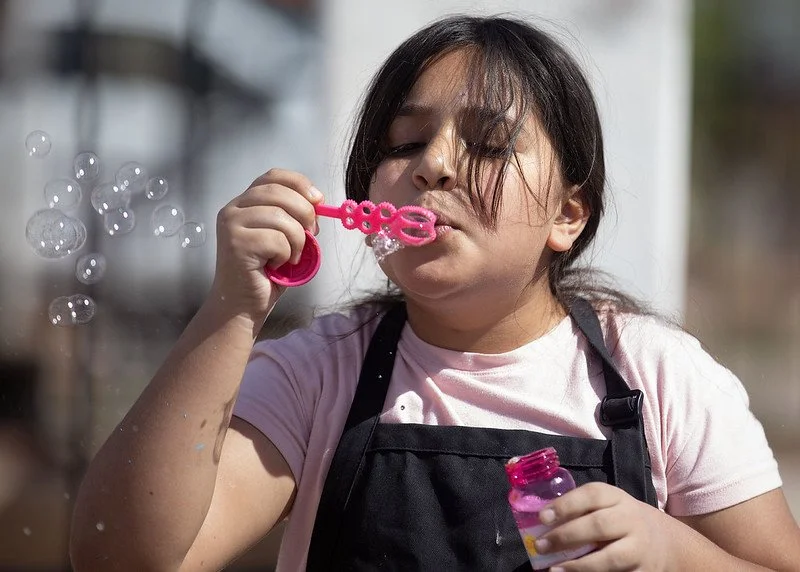
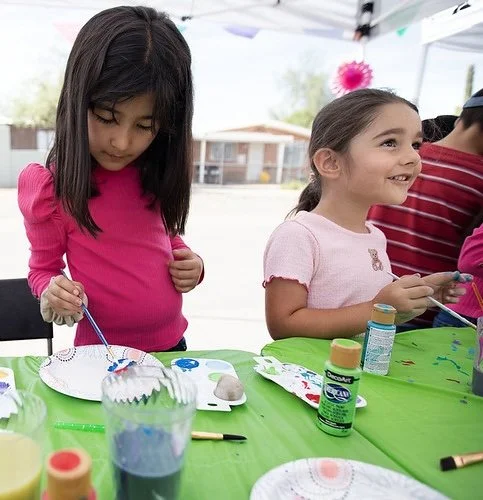
Photos by Mamta Popat
Learning together
We’ve been working with the Amphi Women and Girls Union as community partners more closely for this installation project since June 2026, but our relationship with the group goes back further. While we’ve worked closely with Amphi neighbors since 2022, we started the traffic-calming conversation with the AWGU last summer while working on the Landscape Analysis for the Pima County Health Department’s REACH program. That summer, some of the girls and their neighbors identified several things they wanted to see improved on their neighborhood streets. One of them was the speed of cars and a few dangerous neighborhood intersections.
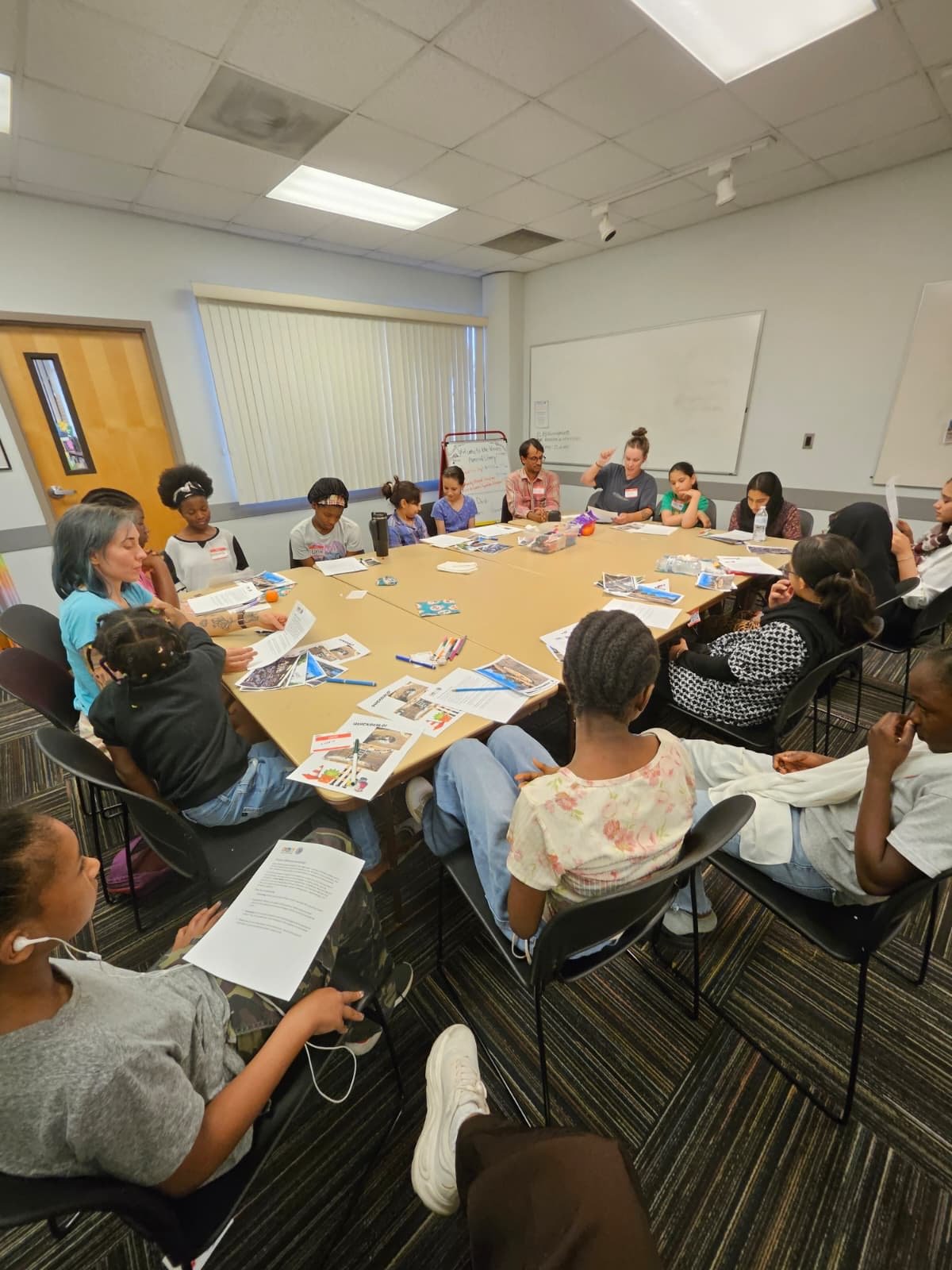
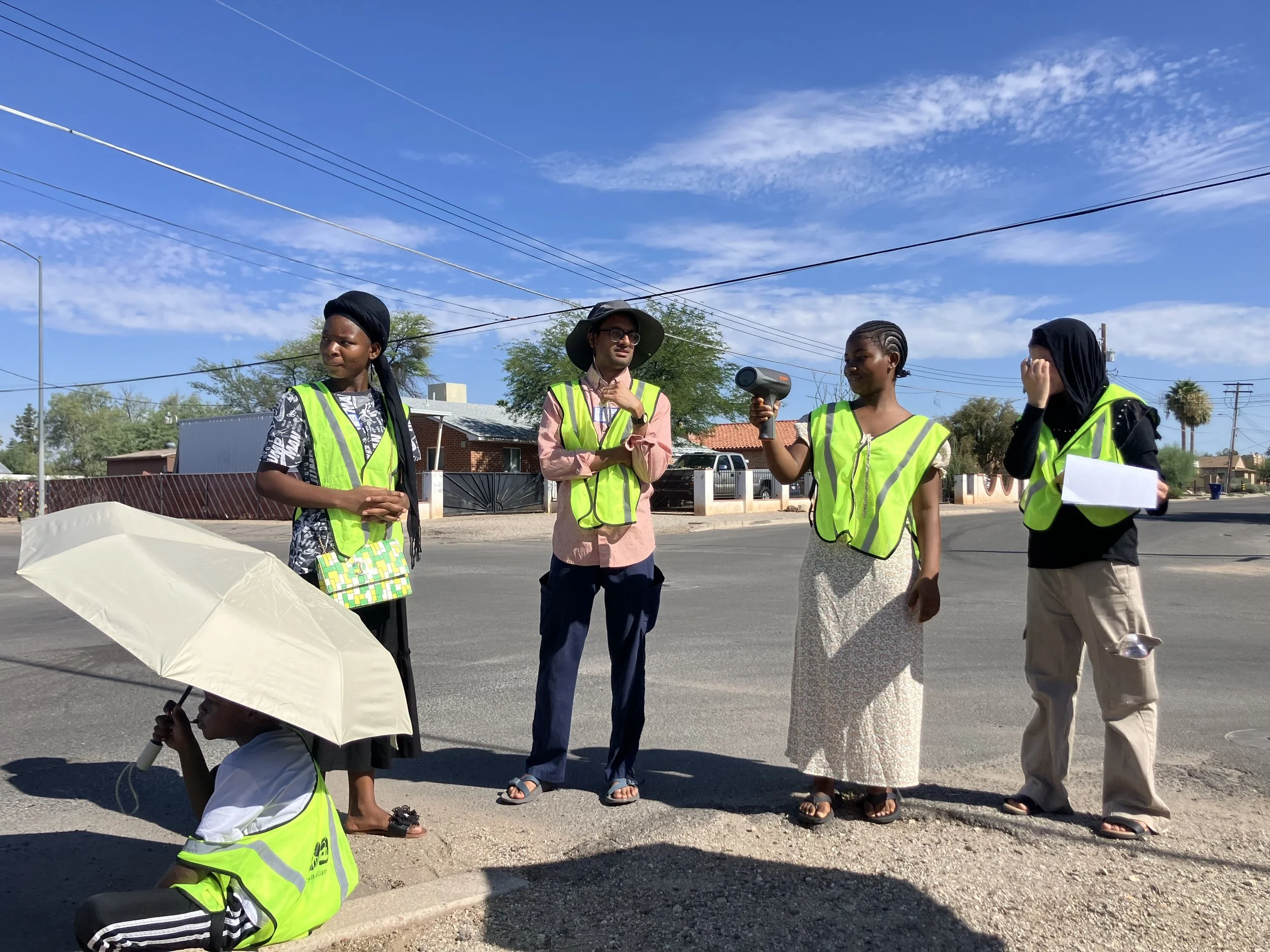
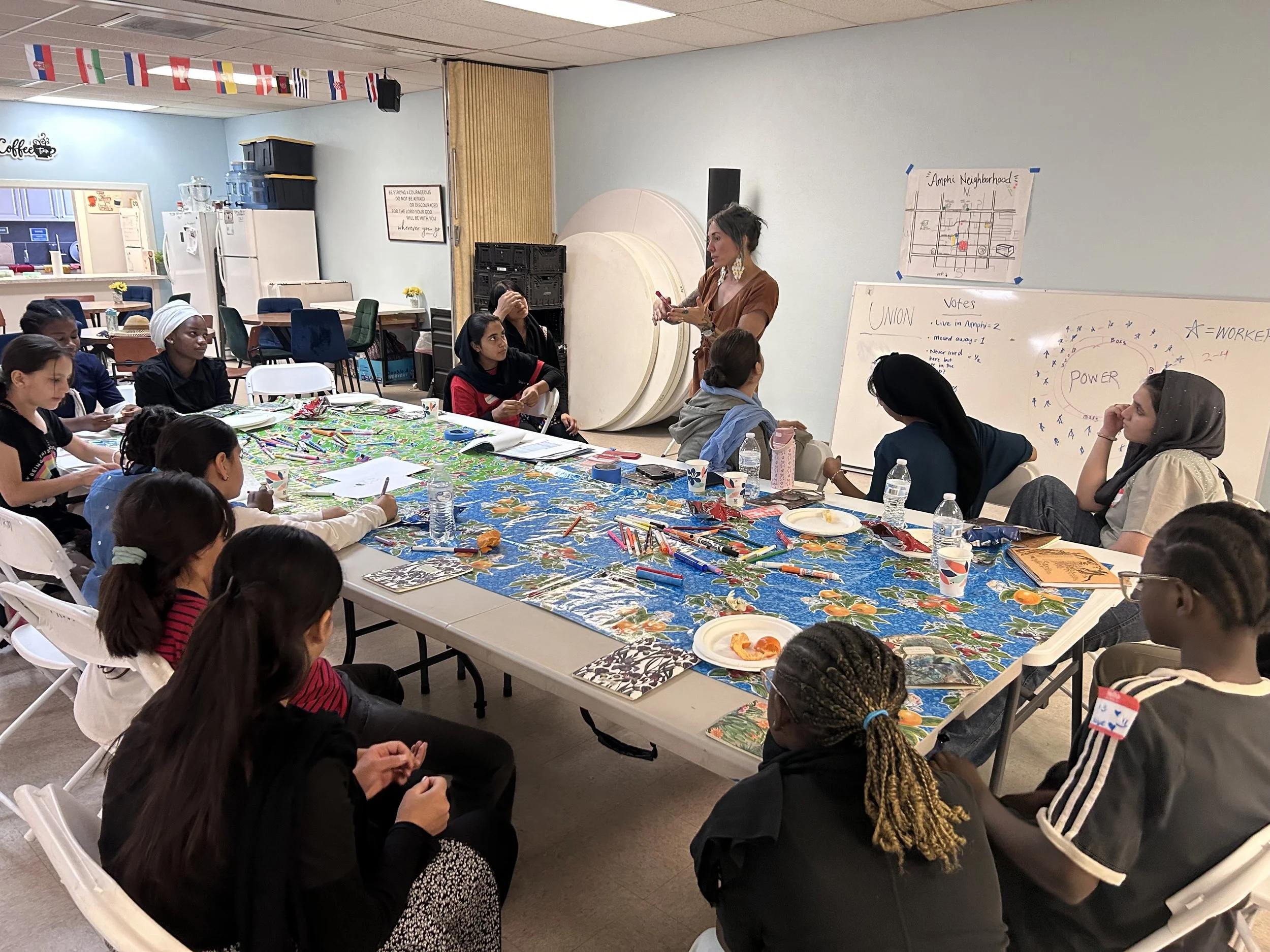
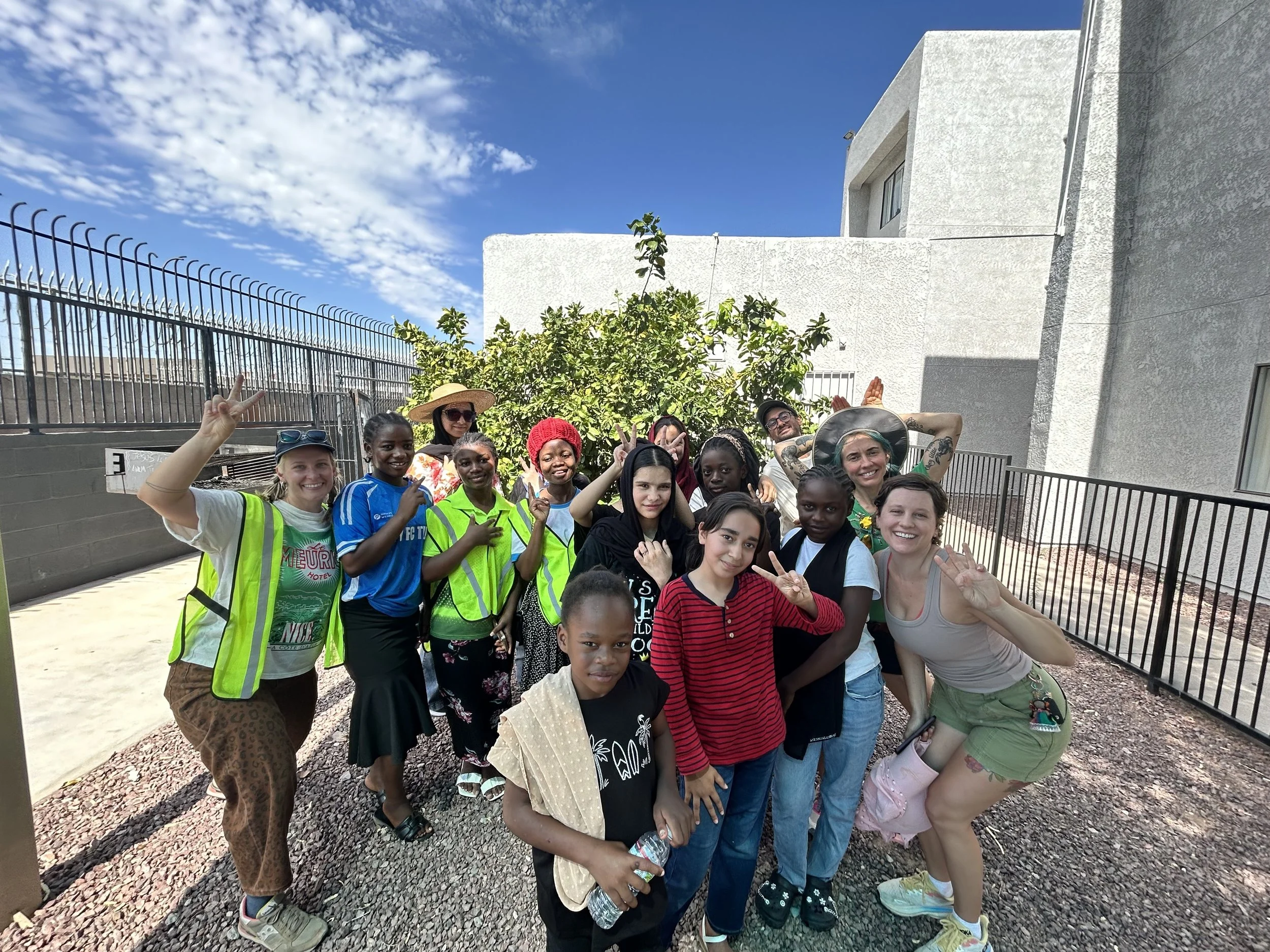
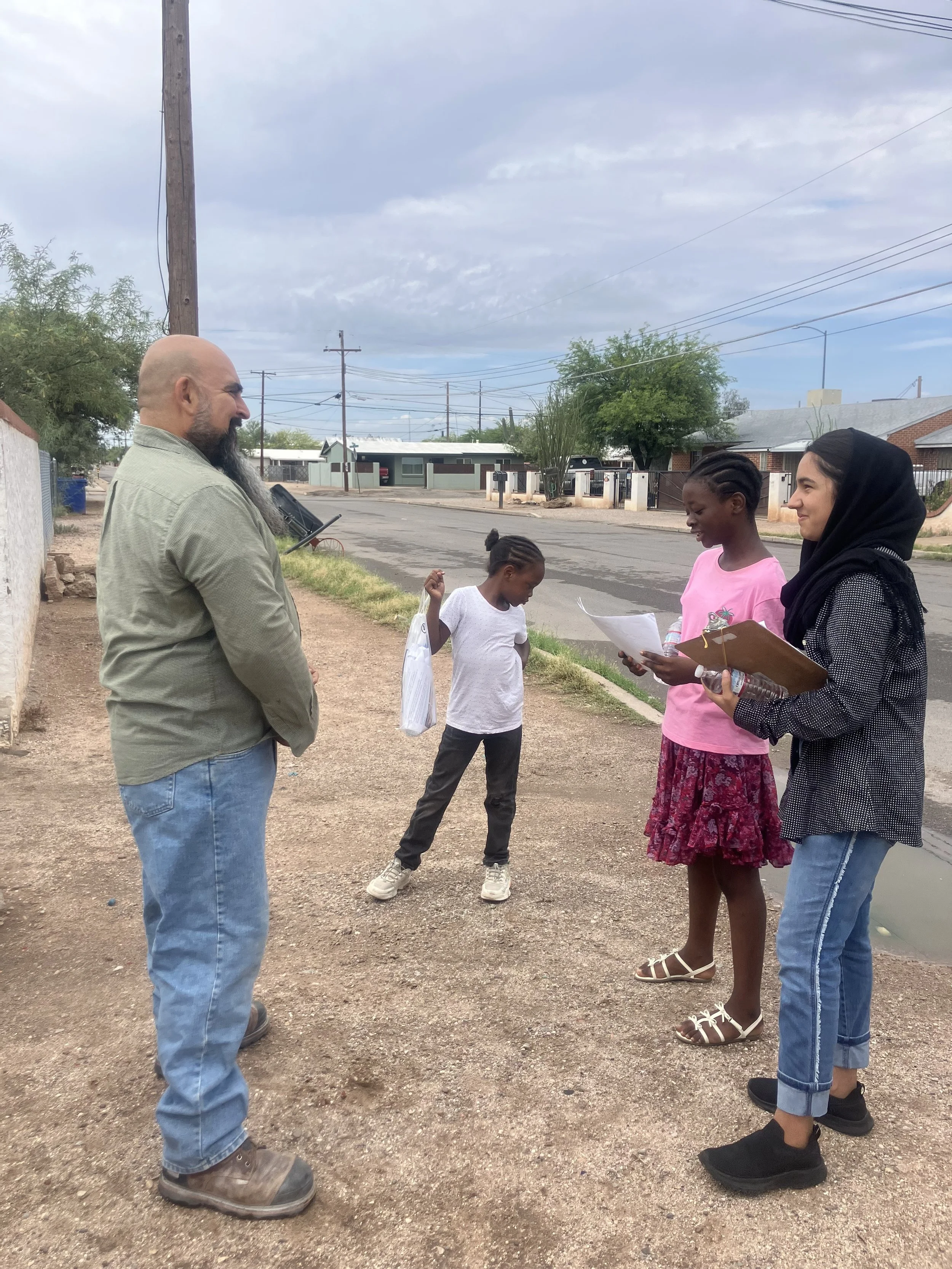
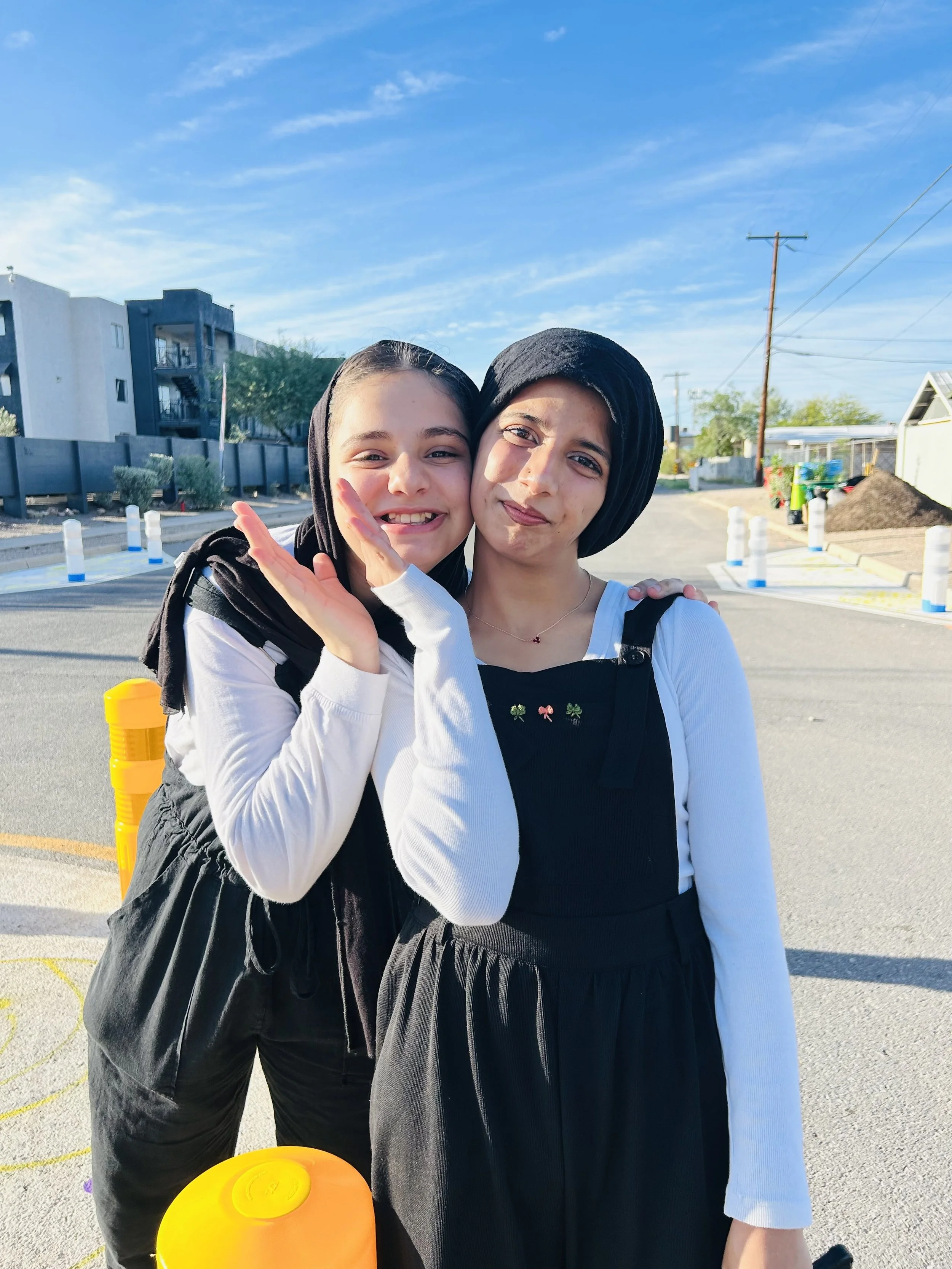
Fast forward to summer 2026 and Aliya was a skeptic. At 13, she wasn’t sure how all of this would turn out and, at first, was not particularly interested in “the built environment” or traffic calming. By the end of the install she shared “It’s beautiful! We need more of these with all these plants, it’s beautiful!” Through the summer were meeting every week to learn about permanent versus temporary infrastructure, project budgets, and host walking audits. Hamida, who is 11, funnily enough, was completely stoked to learn about bump outs, traffic circles, crossing distances, and shade inequality. Hafsa had ideas—or stories, rather—about just about every topic we talked about. When we went door-to-door to collect signatures for project approval, she shared stories about the project with neighbors along the way, showing them photos and engineering drawings.
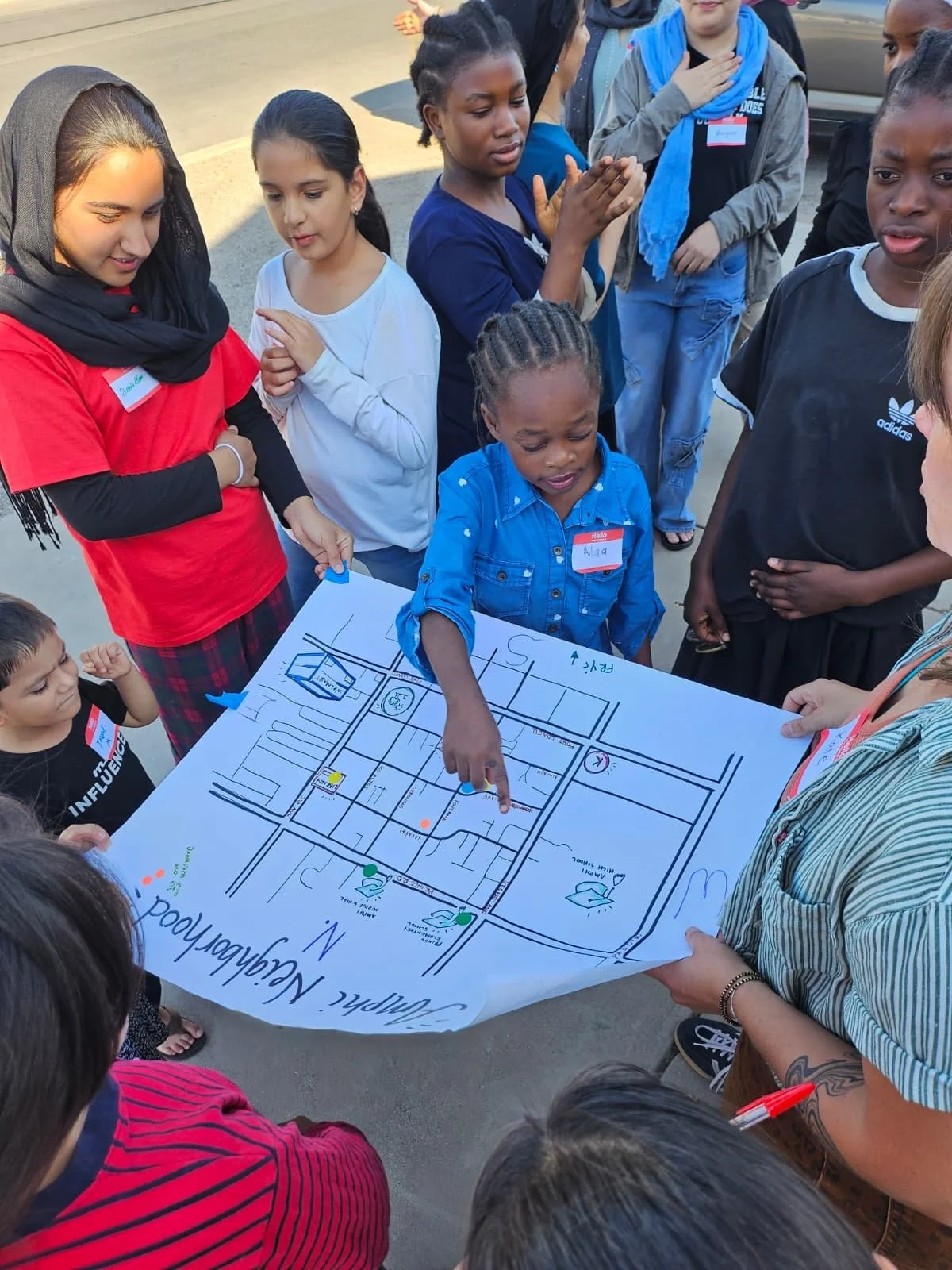
And now we have completed the actual installation of the Quick Build at their top-priority location! With the leadership and guidance of the AWGU, and support from PSOMAS engineering, we landed on one traffic circle in the center of Navajo Road and Fontana Avenue and five chicanes, or “bump outs,” as you approach the intersection.
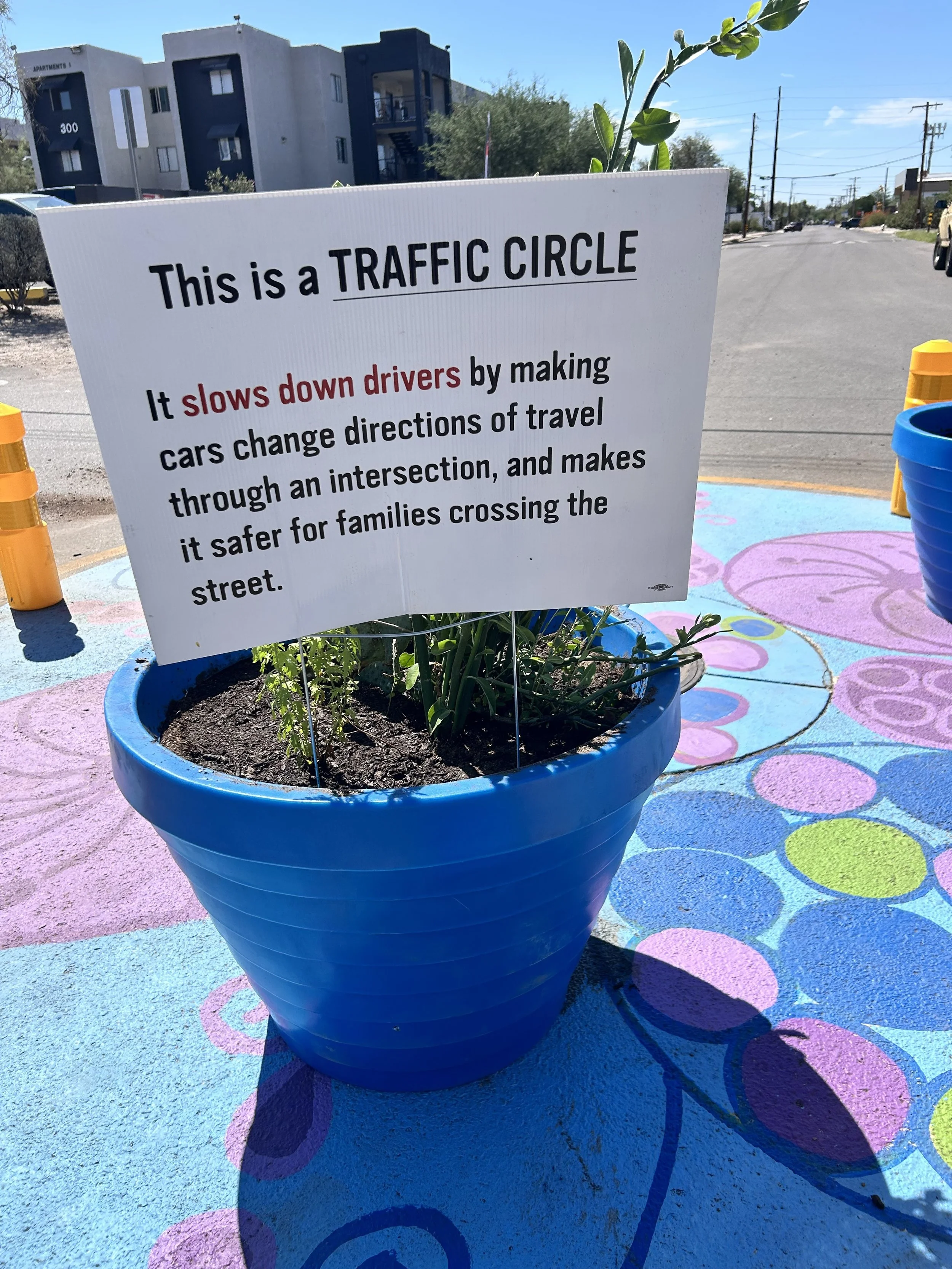
The changes are intended to slow down car traffic, bring attention to the existing stop signs, and increase visibility for people crossing. These changes have also become a meaningful piece of public art along a route that the girls and their neighbors walk every day—to school, to church, to the community center, to friends’ apartments, to the grocery store.
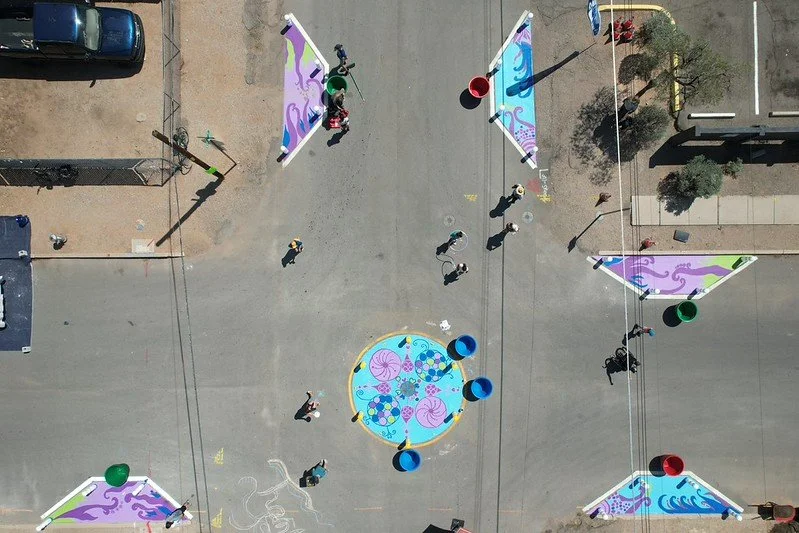
Photo by Lucas Boring with Speedy Striping
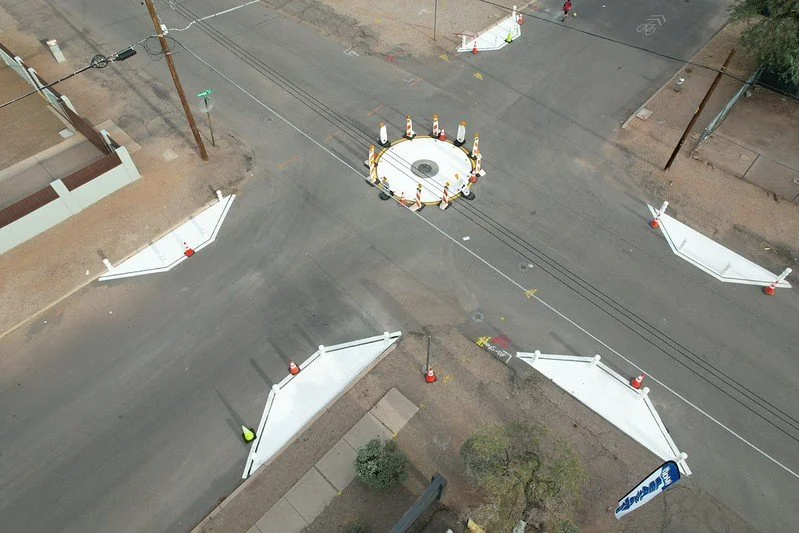
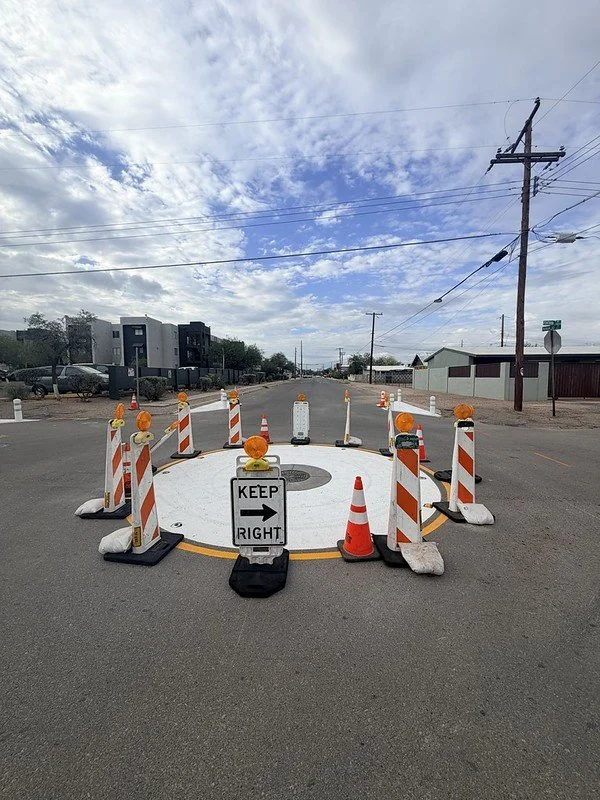
Photos by Lucas Boring with Speedy Striping
A project that belongs to the community
There are a few things that feel special about this project. One is that we were able to make a material change in a relatively short amount of time– going beyond community engagement and making physical improvements to the environment, with and alongside the Amphi Women and Girls Union.
The AWGU is a self-organized group of women and girls who live in or are connected to the neighborhood. They fight for economic justice, and through this project they chose to prioritize workforce development, strengthening their leadership skills, practicing English, public speaking, and collaboration. They stress the importance of community members, especially women and girls, to be paid for their time and efforts.
For the first half of the summer, we met every week at the Building Bridges Community Center—shoutout Tucson Refugee Ministry for letting us use the space! We learned about traffic calming, negotiated budgets and pay, hosted creative workshops for decorating the traffic circle, discussed issues that came up during our walking audits, and voted democratically on each decision point. The AWGU has a clear voting structure, and this project was an opportunity to practice and exercise that structure again and again. Their ideas as a Union—where to place the traffic circle, what the priority issues are, what the project should look like—were actually in the hands of the Union.
Through that process, we learned that the whole stretch of Navajo and Fontana is a key concern, and that the entire corridor of Navajo from 1st Avenue to Stone Avenue is troubling. It sits on a heavy floodplain, along a wide neighborhood street with no sidewalks and sloped asphalt where the sidewalks should be. Each intersection is only a two-way stop along Navajo, which people way too often blow through while driving.
Moms push strollers partway into the street to get to the store. Many kids aren’t allowed to play in front of their apartments because cars go too fast. And when it rains, cars drive up on the sides of the sloped street because of the flooding.
Working closely with an organized group of neighbors has meant that we learn a lot. We get to develop and adapt a project through an iterative process, responding to what people actually need and want. But it also means something bigger: because we share power and leadership—not just at face value—this project belongs to them. There are things we continue to learn. And when we get feedback that is contrary to what we thought, or maybe even critical of what we’ve done, we believe them and change course—we change the intersection, we pursue the public art process when we weren’t originally planning on it, we change the color of the pots, we adjust the budget five times, haha.
So often, that is what builds trust. We trust that we are in this together, and that our relationships are always more important than the product. And then the product is pretty awesome!
When the streets blossom
Lastly, the beauty of this project. When we met with the girls early-on in the summer, we gave them the option of either hiring a local artist who they could meet and work with or paying someone internally within the group to develop the artwork.
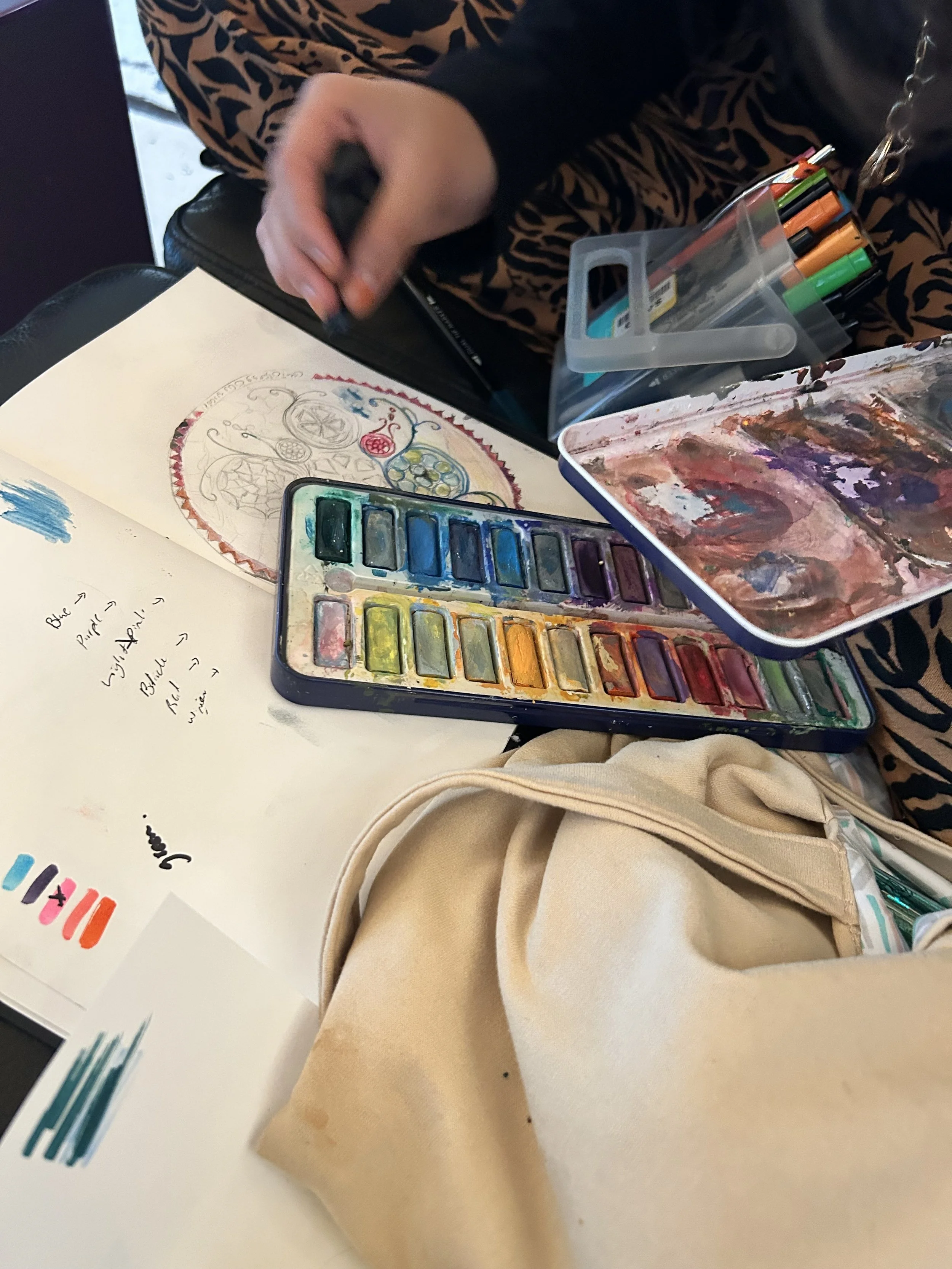
They all voted for Marwa Malikzada, an 18-year-old member of the Union, who had just graduated high school and is an artist, to take the lead on the artwork. We then supported Marwa as she made the creative aspects of the installation come to life. She developed her preliminary ideas and collected feedback and preferences from the rest of the girls in the Union. We originally tried to keep the design to basic geometric shapes, since that is what can get approved by the City most easily without going through the more formal Public Art Approval Process. But Marwa’s drawings were too fabulous and beautiful and ultimately we didn’t want to dilute them just to fit the requirement.
So, with a lot of help from the Arts Foundation team—shoutout to Sadie and team for supporting us through the process! — we navigated the public art approval process just in time before our install date. We filled out all the forms, collected all the signatures, and Marwa spoke at the PACCD art approval panel, which unanimously approved her design. And now she has her first public art piece on record!
She titled it “Amphi Bloom” and shared that “when the streets blossom with art, kids can grow and play safely.”
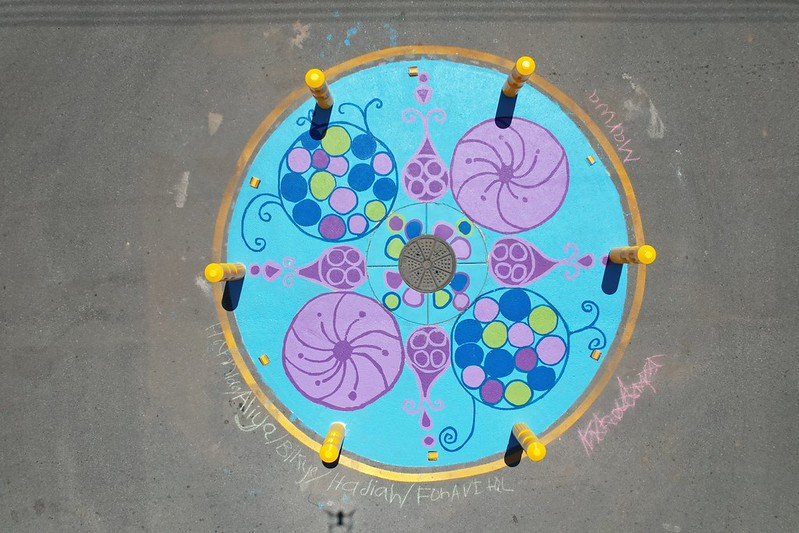
Photo by Lucas Boring with Speedy Striping
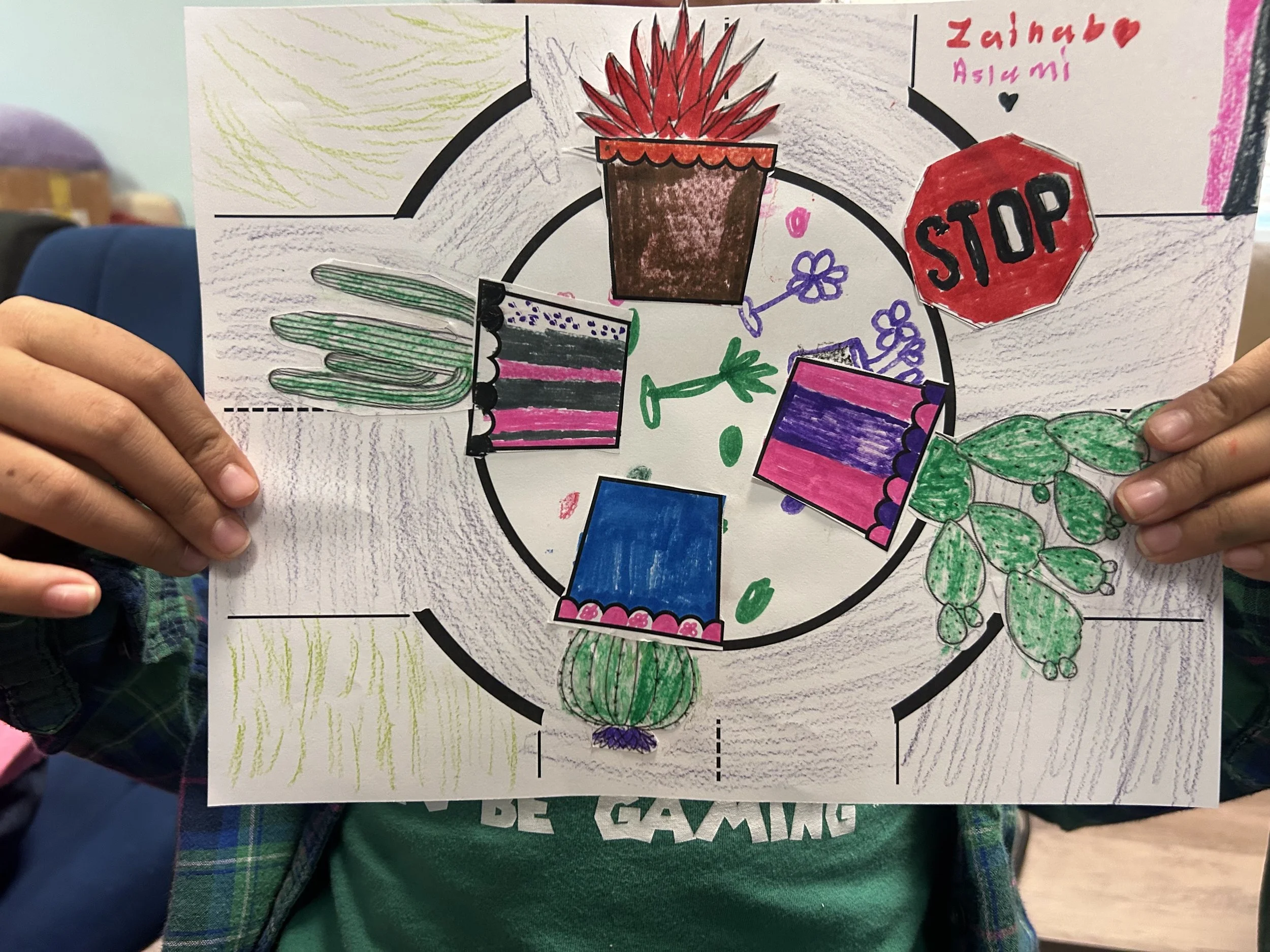
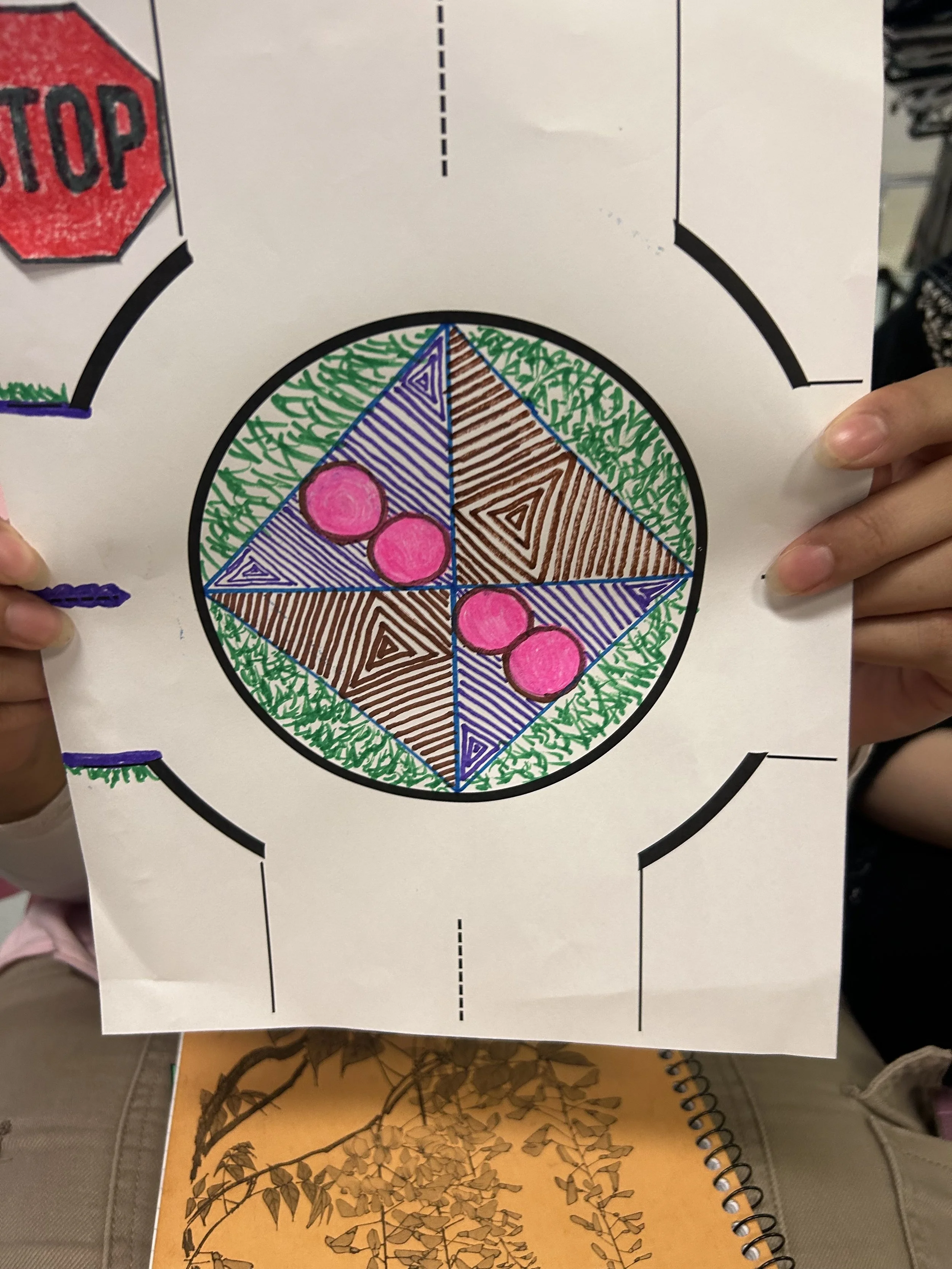
And that’s what we are proud to be a part of. This project has become a place where we can come together to look at the engineering of our built environment and make real safety improvements in a short amount of time. And it is also a site of possibility where we get to practice what it would look like if our neighborhoods were shaped by the women and girls who live there, where these women and girls get paid for learning the tools needed to make the change they want and to celebrate their efforts with neighbors and help create a space of joy and connection.
We’re deeply grateful to the Amphi Women and Girls Union for all their hard work in shaping this project and the streets of Tucson. Thank you to PSOMAS engineering for their time and technical support, Speedy Striping for the installation and collaboration, Ward 3 for supporting us with food and outreach, Tucson Refugee Ministry for the community space to meet and organize, Tucson Clean and Beautiful for the plants and guidance, The Arts Foundation of Southern Arizona for making the public artwork possible, the Pima County Health Department for funding and supporting this important work, and all of the neighbors who supported this effort.
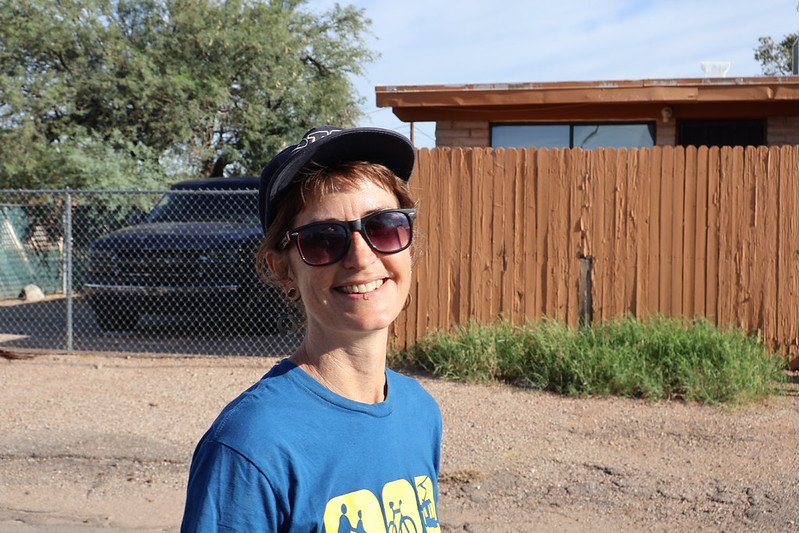
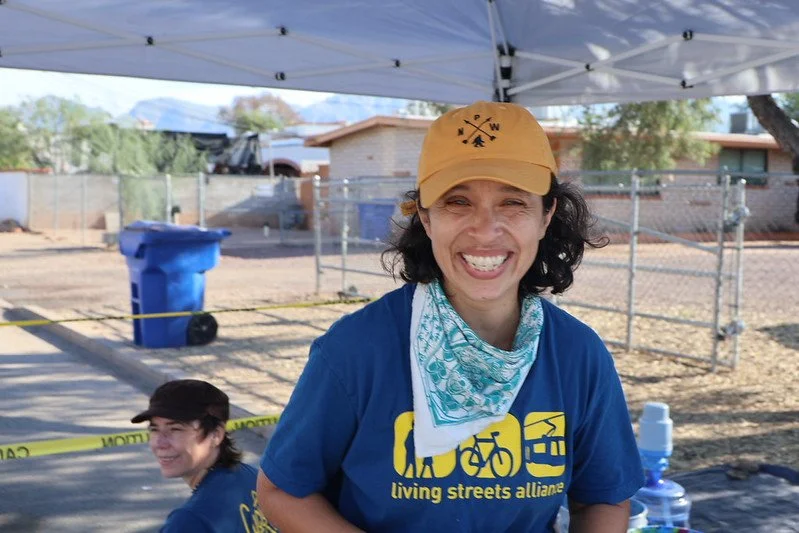
Photos by Mampa Popat and Marcelino Flores